
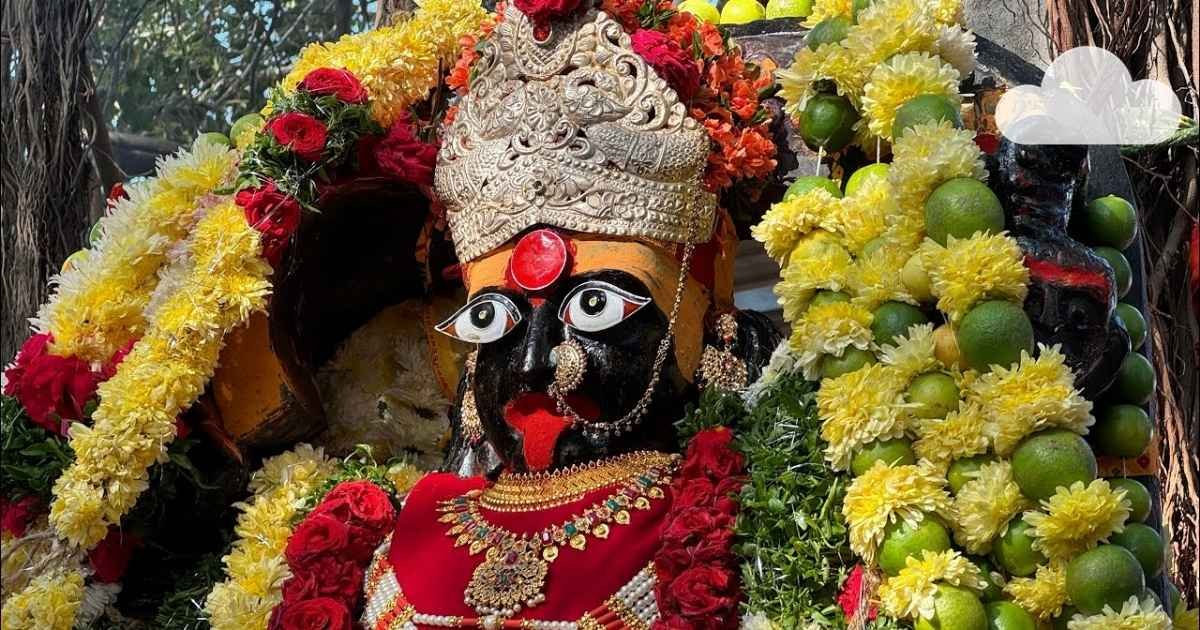
The Falaknuma Kali Mata Temple is a Hindu shrine dedicated to Goddess Kali in Falaknuma, Old City Hyderabad, Telangana. Devotees visit it for protection, courage and relief from fear. It is busiest on Amavasya, Fridays, Navaratri and during Bonalu.
Old Hyderabad is known for Charminar, the pearl markets and the Nizam-era palaces. Tucked into the same neighborhood is a Shakti shrine that draws crowds from across the city. It is a working neighborhood temple, not a polished tourist attraction, and that is part of its appeal.
This guide brings together what is reliably known, what is local belief, and what you should confirm before you go. That last part matters, because temple timings and rituals can change without notice.
Quick facts
- Deity: Goddess Kali Mata
- Area: Falaknuma, Old City, Hyderabad
- Address: Falaknuma Railway Station Road, Quadri Chaman Colony, Ravindra Naik Nagar, Hyderabad 500053
- Reported timings: 6:00 AM to 12:30 PM and 4:30 PM to 9:00 PM
- Special days: Amavasya, Fridays, Navaratri, Kali Puja, Bonalu
- Nearest railway station: Falaknuma (MMTS and Indian Railways)
Historical Background of Falaknuma Kali Mata Temple
There is no officially recorded founding date for this temple. Some online guides place its origins in the early 20th century. Others describe it only as “several decades old.” I could not find an archaeological record, inscription or trust document that settles the question.
What we do have is local tradition. Residents of the Falaknuma area describe the shrine as a community guardian. Accounts passed down among devotees mention early worshippers who reported visions and answered prayers. Over time, word spread and the temple grew from a small local shrine into a place people travel to.
The location adds context. Falaknuma is named after the famous Falaknuma Palace, which was completed in 1893 and is about 5 km from Charminar. The neighborhood grew around railway lines, workers’ colonies and old Hyderabad settlements. A Kali temple here fits the pattern of Shakti worship in Telangana, where village goddesses are often seen as protectors of a whole locality.
If you are writing about or researching the temple, the honest position is this. The lived tradition is strong and well known locally, but the written history is thin. Speaking with the temple priests or committee is the best way to get dates and names.
Presiding Deity – Goddess Kali Mata
The main deity is Goddess Kali, one of the most powerful forms of the Divine Mother in Hindu tradition. Here she is worshipped in her classic form. She has a dark complexion, multiple arms, weapons in her hands and a garland of skulls.
Many first-time visitors find the image intense. Devotees see it differently. To them, Kali is a mother who fights for her children. The fierce look is aimed at fear, ego and injustice, not at the devotee.
Some points about the iconography that help you understand what you are seeing:
- Dark form: It represents the source from which all creation emerges.
- Weapons: They stand for cutting away ignorance and attachment.
- Garland of skulls: It points to the impermanence of everything and the passing of time.
- Red cloth and flowers: Red is the color of Shakti, the divine feminine energy.
Spiritual Significance of Kali Worship
The name “Kali” is linked to Kala, the Sanskrit word for time. In Shakti tradition, she stands for time that spares nothing, and for the courage to face that truth without panic.
Kali worship is often misunderstood as being only about fear or destruction. In practice, devotees approach her for very ordinary needs:
- Protection from harm and negative influences
- Strength during illness, legal trouble or financial stress
- Freedom from fear and anxiety
- Spiritual growth and letting go of ego
Many people in Telangana grew up with the idea that a fierce goddess protects the family and the neighborhood. Falaknuma Kali Mata fits that tradition. Devotees who come here say they feel calm after a short darshan, even in a busy area.
One note on belief. Claims that the temple “changes lives” or “grants every wish” are statements of faith. They are meaningful to devotees, but they are not verifiable facts. Visit with respect and an open mind, and let your own experience guide you.
Architecture and Temple Structure
This is not a large, towering Dravidian complex. It is a compact neighborhood shrine in a dense urban setting, close to the railway line. Detailed records of its construction are not publicly documented, so I will describe only what visitors commonly notice.
- Sanctum (garbhagriha): This houses the idol of Kali Mata and is the focus of all rituals.
- Entrance and queue area: The layout encourages a straight line of movement from the entrance to the deity. On busy days, lines form outside.
- Surroundings: Flower sellers, small stalls and the sound of trains nearby are part of the experience.
- Atmosphere: Even with noise around the temple, visitors describe a calm mood inside the sanctum.
Expect a functional, devotion-first design. The emphasis is on the goddess, not on decoration.
Falaknuma Kali Mata Temple Timings
Reported darshan timings:
- Morning: 6:00 AM to 12:30 PM
- Evening: 4:30 PM to 9:00 PM
Timings may be extended on Amavasya, Navaratri and other festival days. These timings come from a third-party guide, not an official temple notice. Call the temple or ask a local devotee before making a long trip.
A few planning tips:
- The temple is usually calmer on weekday mornings.
- The afternoon closure is normal in most South Indian temples. Do not arrive between 12:30 PM and 4:30 PM expecting darshan.
- On big days, doors may open earlier and stay open later.
Daily Poojas and Rituals
The temple follows the usual rhythm of a Shakti shrine. Exact seva timings and prices are not published in any reliable place I could find, so confirm them at the temple counter.
Common daily practices include:
- Morning awakening and cleansing of the idol (abhishekam)
- Alankaram, where the goddess is decorated with fresh flowers, cloth and ornaments
- Archana, where the priest chants names of the goddess on behalf of the devotee, often using your name and gotra
- Harathi, the waving of a lamp before the deity, usually in the morning and evening
- Prasadam distribution after the rituals
Common devotee offerings:
- Red flowers, especially hibiscus
- Lemon, coconut and incense
- Kumkum and turmeric
- Sarees or red cloth on special occasions
Tuesdays and Fridays are considered auspicious for Devi worship across Telangana. Fridays in particular bring larger crowds to this temple.
Major Festivals Celebrated
Festivals turn this temple into a very different place. Streets fill up, music plays and queues stretch outside.
Navaratri
The nine-night festival is the grandest celebration of the year. The goddess is dressed differently each day, and special morning and evening poojas are held. Thousands of devotees visit across the nine days.
Kali Puja
Held on the Amavasya night near Diwali season, this is a night-long observance. Devotees seek protection and strength through special offerings and rituals.
Bonalu
This is a Telangana tradition, celebrated during Ashada Masam, usually in July or August. Women carry decorated pots of cooked rice, called Bonam, to the goddess as thanks for protection of the family and community. Falaknuma’s Bonalu is part of the larger Hyderabad Bonalu season, which also includes Golconda, Lal Darwaza and Secunderabad Ujjaini Mahankali.
Other occasions
- Fridays throughout the year
- Local jatara-style celebrations, when announced by the temple committee
Festival dates change every year with the Hindu calendar. Check a current Panchang or the temple’s announcements for exact dates.
Importance of Amavasya at Kali Mata Temple
Amavasya is the new moon day. In Shakti tradition, it is considered a powerful time for Kali worship. Devotees believe that prayers on this day help clear fear, obstacles and negative energy.
At Falaknuma, every monthly Amavasya is treated almost like a mini festival. A recent Amavasya video posted by devotees shows a heavily crowded temple with an Alankaram Pooja. That fits with what regular visitors report: big crowds, long lines and extended hours.
If you plan to visit on Amavasya:
- Arrive early, ideally before 7:00 AM, or go later in the evening
- Carry only what you need, since crowds are tight
- Keep children close and hold on to valuables
- Allow 2 to 3 hours for darshan on a busy day (an estimate, not an official figure)
If you prefer a quiet visit, avoid Amavasya and choose a weekday morning.
How to Reach Falaknuma Kali Mata Temple
Address: Falaknuma Railway Station Road, Quadri Chaman Colony, Ravindra Naik Nagar, Falaknuma, Hyderabad, Telangana 500053
By train (MMTS)
The nearest station is Falaknuma Railway Station, which is served by Indian Railways and the Hyderabad MMTS. From there, the temple is a short auto ride. MMTS services run on the Lingampally to Falaknuma line. Timetables change, so check the latest schedule before you travel.
By road
Autos, cabs and app-based taxis are easy to find from Charminar, Mehdipatnam and Bahadurpura. Tell the driver “Falaknuma Kali Mata temple” and they will know it. Parking is available around the temple, but space gets tight on weekends and Amavasya.
By bus
TSRTC buses run to Falaknuma from Charminar and MGBS (Mahatma Gandhi Bus Station). Ask the conductor to alert you at the Falaknuma stop.
By metro
This is where some older guides give wrong directions. As of my research, the Hyderabad Metro does not reach Falaknuma. The MGBS to Falaknuma extension has been discussed and was before the High Court in late 2025, but it is not a running service. Use the Red Line to MGBS, then take a bus, auto or cab.
By air
Rajiv Gandhi International Airport in Shamshabad is about 30 km away. Cabs are the easiest option. Travel time depends heavily on traffic.
Travel tips
- Old City roads are crowded. Leave extra time.
- Use a navigation app for live traffic.
- Avoid driving your own car on festival days if you can.
- Agree on the auto fare before you sit.
Best Time to Visit
Best time of day: Early morning, between 6:00 AM and 8:00 AM, is usually calm. Evenings are more crowded after office hours.
Best days:
- For a quiet darshan: Weekday mornings
- For special rituals and energy: Fridays and Amavasya
- For festival atmosphere: Navaratri and Bonalu
Best season: October to February is the most comfortable, with cooler weather. Summers in Hyderabad are hot, and monsoon rain can make Old City roads slow.
Dress Code and Temple Guidelines
There is no strict, published dress code. Follow the standard rules for Hindu temples.
- Wear modest, comfortable clothing. Traditional wear such as sarees, kurtas and salwar suits is common.
- Avoid very short or sleeveless clothing.
- Remove footwear before entering. Keep them at the designated stand or leave them in your vehicle.
- Keep your phone silent.
- Ask before taking photos. Photography inside the sanctum is often restricted in temples of this kind, so respect any signs.
- Follow the queue and the priest’s instructions.
- Do not bring leather items or non-vegetarian food into the temple.
- Buy offerings from nearby shops and check prices before paying.
Beliefs and Devotee Experiences
Ask devotees why they come, and the answers are personal and practical. Most mention:
- Courage before an exam, surgery, court date or job interview
- A sense of protection for children and family
- Relief from fear and bad dreams
- Gratitude after a difficult period ended
Some devotees visit weekly for years. Others come once, during a hard time, and return every year to say thanks. Many say they felt a sense of stillness inside, even in a noisy area.
A balanced view is useful. These are personal experiences of faith. They are valuable to the people who share them, but they do not replace medical, legal or financial help. Kali is worshipped as a source of strength, and most devotees pair prayer with practical steps in life.
Nearby Temples and Attractions
You can easily combine a visit with other places in Old Hyderabad.
- Falaknuma Palace: A Paigah and Nizam-era palace, now the Taj Falaknuma Palace hotel. It was completed in 1893 and sits on a hill about 5 km from Charminar. Entry is limited to hotel guests and pre-booked experiences, so plan ahead.
- Charminar: The 16th-century landmark and the symbolic heart of the Old City.
- Mecca Masjid: One of the oldest and largest mosques in India, close to Charminar.
- Laad Bazaar: Famous for bangles, pearls and traditional jewelry.
- Other Shakti temples in Hyderabad: Devotees often pair this visit with Bhagyalakshmi Temple near Charminar or Balkampet Yellamma Temple.
This mix of temples, mosques and palaces shows how many faiths and histories sit side by side in Old Hyderabad.
Why Falaknuma Kali Mata Temple Is Spiritually Powerful
There is no single reason. Devotees usually point to a combination of things:
- Steady daily worship: Rituals have continued for years without a break, and that consistency builds a strong devotional atmosphere.
- Community faith: Generations of local families treat the goddess as their protector. That shared belief gives the place its weight.
- The Kali tradition itself: Kali is seen as the goddess who responds quickly to sincere prayer, especially at Amavasya.
- Contrast: Stepping from a crowded street into a calm sanctum makes the experience feel stronger.
- Festivals: Navaratri and Bonalu bring a large, emotional gathering that many people remember for life.
Spiritual power is felt, not measured. If you go with sincerity, patience and respect, you are likely to take something meaningful away, whatever your background.
Frequently Asked Questions
Where is Falaknuma Kali Mata Temple located?
It is in Falaknuma, Old City Hyderabad, on Falaknuma Railway Station Road near Quadri Chaman Colony, Telangana 500053.
What are the Falaknuma Kali Mata Temple timings?
Reported timings are 6:00 AM to 12:30 PM and 4:30 PM to 9:00 PM. Confirm with the temple, as festival days may differ.
Who is the main deity of the temple?
The main deity is Goddess Kali Mata, worshipped as a fierce and protective form of the Divine Mother.
When was Falaknuma Kali Mata Temple built?
There is no verified founding date. Local tradition describes it as several decades old.
Which day is best to visit?
Fridays and Amavasya are considered especially powerful. Weekday mornings are best for a quiet visit.
Is there a dress code at the temple?
No strict code is published. Wear modest clothing and remove your footwear before entering.
How do I reach the temple by public transport?
Take an MMTS train to Falaknuma Railway Station or a TSRTC bus from Charminar or MGBS, then an auto to the temple.
Does the Hyderabad Metro reach Falaknuma?
Not currently. The MGBS to Falaknuma route has been proposed but is not operational, so use a bus, auto or cab from MGBS.
Which festivals are celebrated here?
Navaratri, Kali Puja, Bonalu and every monthly Amavasya are the main occasions.
Is photography allowed inside the temple?
Rules can vary. Ask the temple staff and follow any signs, especially near the sanctum.
Conclusion
Falaknuma Kali Mata Temple is a living Shakti shrine in the middle of Old Hyderabad. It is not known for grand architecture or a recorded royal history. It is known for steady worship, strong community belief and festivals that bring thousands together.
To make the most of your visit, go early, dress modestly and carry only what you need. Choose a weekday morning for a peaceful darshan, or plan for Amavasya, Navaratri or Bonalu if you want the full festival energy. Before you leave, confirm the timings and any special ritual details with the temple.
Combine the trip with Charminar, Laad Bazaar or a look at Falaknuma Palace from outside, and you get a full day of spiritual and cultural Hyderabad. Whatever brings you here, go with patience, respect and an open heart.

1 thought on “Falaknuma Kali Mata Temple Hyderabad – History, Significance, Timings & Complete Darshan Guide”