
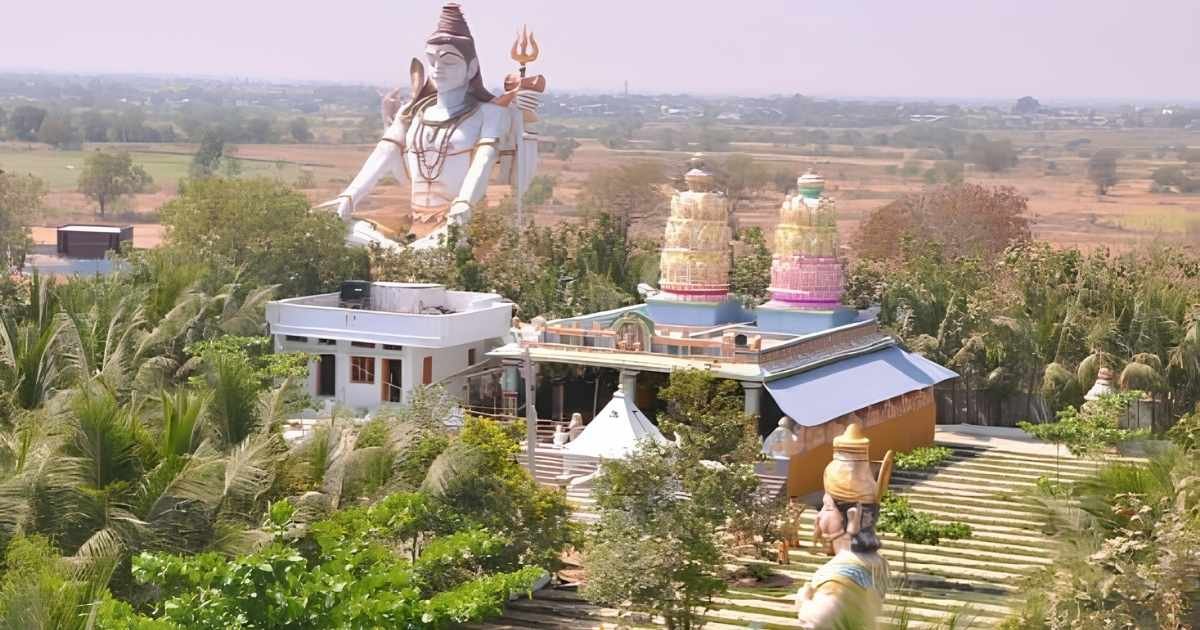
A 65-foot Shiva statue rising above a water-themed temple complex is not something you expect to find in a small town near Tandur. Yet that is exactly what greets visitors at Bhukailash Temple, one of Telangana’s most distinctive Shiva shrines, built by a devotee inspired by Nepal’s famous Pashupatinath Temple.
This guide covers the temple’s history, timings, ticket price, festivals, and travel details in one place, so you can plan your visit with confidence. Where sources disagree on details like timings or entry fees, that is mentioned clearly rather than stated as fact.
Introduction to Bhukailash – Meaning and Spiritual Concept
The word “Bhukailash” combines “Bhu” (earth) and “Kailash” (Lord Shiva’s celestial abode in the Himalayas). Together, the name means “Kailash on Earth,” reflecting the temple’s purpose: bringing the spiritual experience of Mount Kailash within reach of devotees who cannot travel to the Himalayas.
This concept is not unique to Tandur. Other Bhukailash temples exist elsewhere in India, including a much older one in Kolkata, but each carries its own local history and architecture. The Tandur temple was built specifically to recreate the devotional atmosphere its founder experienced at Pashupatinath in Nepal.
Bhukailash Temple Tandur Location
Bhukailash Temple is located at Antharam Tanda, around 5 km from Tandur town, in what is now Vikarabad district, Telangana. Some older listings place it in Rangareddy district, which is understandable since Vikarabad was formed as a separate district out of Rangareddy only in 2016.
Quick location facts:
- Village: Antharam Tanda
- Nearest town: Tandur
- District: Vikarabad (formerly part of Rangareddy)
- State: Telangana
- Also known as: Water Theme Temple, Bhukailash Dwadasha Devasthanam
For the most accurate directions, search “Bhukailash Temple, Antharam Tanda, Tandur” on Google Maps rather than just the town name.
Bhukailash Temple Tandur History
The story behind this temple is relatively recent compared to many of Telangana’s ancient shrines, but it carries a strong personal devotion narrative.
Around the early 2000s, Pawar Vasu Naik, a Shiva devotee from Antharam Tanda, travelled to the Pashupatinath Temple in Nepal. He is said to have spent roughly four years there, taking part in temple service activities and deepening his devotion to Lord Shiva. Inspired by that experience, he returned home with a vision to build a similar spiritual space in his own village.
Here is how the project came together:
- Vasu Naik shared his vision with his younger brother, Shankar Pawar Naik.
- The brothers committed a significant share of their real estate business income to the project.
- Additional donations came in from supportive devotees in the region.
- Construction began around 2001, on a site spanning more than five acres.
- The temple took close to nine years to build, formally opening to devotees in 2010.
Unlike temples with inscriptions tracing back to the Kakatiya or Satavahana periods, Bhukailash Temple’s history is a modern devotional project. That said, its design and rituals draw heavily on traditional Shaiva practice, giving it a timeless feel despite its relatively young age.
Mythological Significance of Bhukailash
While the temple itself is modern, the beliefs devotees bring to it are rooted in long-standing Shaiva tradition. Visitors commonly associate Bhukailash with:
- Paapa kshaya (cleansing of sins): Many devotees believe sincere worship here helps lighten karmic burdens.
- Mental clarity: The temple’s quiet, water-integrated setting is considered conducive to meditation and focus.
- Connection to Kailash: By recreating the symbolic presence of Shiva’s Himalayan abode, the temple offers a local alternative for those unable to undertake a Kailash pilgrimage.
- Shiva as the universal witness: As in broader Shaiva philosophy, Shiva here is worshipped as a formless, all-pervading presence, approached through the lingam at the temple’s heart.
The broader Shaiva tradition in Telangana traces back through the Satavahana period, the Kakatiya dynasty, and the Chalukya rulers, and Bhukailash positions itself as a continuation of that long devotional lineage, even though the structure itself is contemporary.
Read More: Kondapochamma Temple Telangana: History, Jatara and Timings
Architecture and Temple Layout
Bhukailash Temple’s biggest draw is its scale and its unusual water-integrated design, which is why locals often call it the Water Theme Temple.
Notable architectural features:
- 65-foot Shiva statue: One of the tallest Shiva statues in the region, visible from a distance
- 35-foot Hanuman statue: A striking companion structure within the same complex
- Main Lingam: Positioned beneath the towering Shiva statue, forming the spiritual centre of the temple
- Navagraha Mandapam: A dedicated space for worshipping the nine celestial deities
- Homagundam: A designated area for conducting homas and fire rituals
- Water features: Integrated ponds and water elements throughout the complex, giving it a distinctive, immersive atmosphere compared to typical dry-land temple layouts
The overall style blends Dravidian architectural elements with the founder’s personal vision inspired by Pashupatinath, making it visually different from most traditional Telangana temples.
Daily Rituals and Worship
Worship at Bhukailash Temple follows the traditional Shaiva ritual calendar, built around daily and periodic observances common to Shiva temples across South India.
Commonly practised rituals include:
- Archana: Chanting of the Shiva Ashtottara (108 names of Shiva) for individual devotees
- Rudrabhishekam: Ritual bathing of the lingam, often accompanied by the chanting of Sri Rudram
- Daily darshan: Open to all devotees throughout the temple’s operating hours
- Special day observances: Enhanced rituals on Mondays and other days considered auspicious for Shiva worship
The chanting of Sri Rudram is said to echo through the temple grounds during key rituals, adding to the devotional atmosphere that draws regular visitors from Tandur and surrounding areas.
Bhukailash Temple Tandur Ticket Price
Entry fee details have reportedly changed over time. Visitor reports and online listings mention figures ranging from around ₹40 to ₹100 per person, with the higher figure appearing in more recent visitor accounts.
Since pricing is not consistently published by an official source, it is best to:
- Confirm the current entry fee at the temple counter on arrival.
- Carry small denomination cash, since card payment facilities may be limited.
- Ask about any separate charges for photography or special sections, if applicable.
Major Festivals Celebrated
Maha Shivaratri Brahmotsavam
Maha Shivaratri is by far the biggest celebration at Bhukailash Temple, observed with a week-long Brahmotsavam. Highlights include:
- Elaborate Shiva Parvati Kalyanam (divine wedding ceremony)
- Special homas and fire rituals throughout the celebration
- Extensive abhishekams performed on the main lingam
- Extended temple hours, with some reports suggesting the temple stays open through the night during this festival
Shravan Maas (Holy Month of Lord Shiva)
The entire month of Shravan (typically falling in July to August) is considered especially auspicious for Shiva worship. During this period, the temple sees increased footfall, with devotees performing special poojas and fasting rituals throughout the month.
Pradosha Vrat
Observed twice a month on the 13th lunar day (Trayodashi), Pradosha Vrat is a significant fasting and worship day for Shiva devotees. Many regular visitors plan their temple trips specifically around this date.
Kartika Masam
The month of Kartika, sacred across Shaiva tradition, brings additional rituals and lamp offerings at the temple. Devotees often light diyas and perform special evening prayers during this period, continuing a broader South Indian tradition associated with this month.
Spiritual Benefits of Worship
Regular devotees describe a few recurring benefits associated with worshipping at Bhukailash Temple:
- Inner peace. The combination of water features and open spaces creates a calmer environment than many crowded urban temples.
- Relief from stress. Many visitors describe the temple as a peaceful escape from daily pressures.
- Spiritual grounding. The symbolic connection to Kailash gives devotees a sense of participating in a larger, ancient tradition.
- Family bonding. The temple’s scale and scenic layout make it a popular spot for family outings combined with worship, rather than a purely ritual-focused visit.
Read More: Inavolu Mallikarjuna Swamy Temple: History, Timings & Guide
Bhukailash Temple Tandur Timings
Reported timings differ across sources, so treat the following as a general guide rather than a fixed schedule:
| Source Pattern | Morning | Afternoon Break | Evening |
| Commonly cited schedule | 6:00 AM to 12:00 PM | None listed | 4:30 PM to 8:00 PM |
| Visitor-reported schedule | 7:30 AM to 1:00 PM | 1:00 PM to 2:00 PM | 2:00 PM to 8:00 PM |
Some older listings mention hours as broad as 9 AM to 7 PM. Timings are also known to extend during Maha Shivaratri, when the temple may stay open through the night. Given these differences, calling the temple or checking recent visitor reviews before a long trip is strongly recommended.
Bhukailash Temple Karnataka
Some searches confuse Bhukailash Temple Tandur with similarly named temples in other states. There is no widely documented, prominent “Bhukailash Temple” in Karnataka that matches this Tandur temple’s scale or history. If you came across this term while researching, you are most likely looking for the Telangana temple at Antharam Tanda, near Tandur, or possibly the historic Bhukailash Temple in Kolkata, West Bengal, which is a completely different and much older site.
Tandur Shiva Temple Distance
“Tandur Shiva Temple” is a common alternate search term for Bhukailash Temple, since it is the most prominent Shiva temple associated with the town.
Approximate distances:
- From Tandur town centre: Around 5 km to Antharam Tanda
- From Hyderabad: Approximately 100 km, based on the distance commonly cited via Rajiv Gandhi International Airport
- From Vikarabad town: A shorter regional drive, typically under an hour
As always, use a live maps app for the most accurate, real-time distance from your specific starting point.
How to Reach Bhukailash Temple Tandur
By Road
The temple is accessible by road from Hyderabad, generally via the Hyderabad-Tandur route. Self-driven cars, cabs, and local buses to Tandur are all viable options, with a short local ride from Tandur town to Antharam Tanda to finish the journey.
By Train
Tandur has its own railway station, connected to Hyderabad and other parts of Telangana. From Tandur railway station, it is a short local drive of about 5 km to reach the temple.
By Air
The nearest airport is Rajiv Gandhi International Airport, Hyderabad, approximately 100 km away. From the airport, visitors can hire a taxi or arrange other transport for the journey to Tandur and onward to the temple.
Best Time to Visit
The most pleasant months to visit are October through February, when Telangana’s weather is cooler and more comfortable for a day trip involving outdoor walking.
Additional tips:
- Weekday mornings tend to be quieter than weekends.
- Maha Shivaratri offers the most elaborate festival experience, though it also brings the largest crowds.
- Shravan Monday visits are popular among regular Shiva devotees seeking a more spiritually focused trip.
Temple Etiquette
Like most Shiva temples in Telangana, Bhukailash expects modest, respectful behaviour from all visitors.
Suggested guidelines:
- Wear traditional or modest clothing, avoiding shorts and sleeveless tops.
- Remove footwear before entering the main shrine areas.
- Maintain a respectful silence near the lingam and sanctum.
- Follow any posted rules regarding the water features, since some areas may be restricted for safety.
- Ask temple staff before taking photographs in sensitive areas.
Read More: Guruvayur Darshan Online Booking 2026: Complete Guide, Tickets & Timings
Nearby Attractions
If you are travelling out to Tandur, consider combining your visit with other regional spots:
- Tandur town itself, known for its local markets and cement industry history
- Pargi and Vikarabad area temples, if you have time for a broader regional temple trail
- Anantagiri Hills, a scenic nature destination in the wider Vikarabad district, popular for short day trips
Devotee Experiences
Visitors frequently mention a few recurring themes in their experience at Bhukailash Temple:
- The scale of the Shiva and Hanuman statues leaves a strong first impression, often compared favourably to much larger, more famous temples.
- The water-integrated design stands out as unusual and memorable compared to typical dry temple complexes in the region.
- Many describe the temple as a peaceful, less crowded alternative to busier pilgrimage sites, making it suitable for a calm, reflective visit.
- Some visitors note that facilities and ticket pricing have changed over the years, reinforcing the importance of checking current details before a trip.
Cultural Importance
Beyond its religious function, Bhukailash Temple has become a point of local pride for Tandur and the surrounding Vikarabad district. It represents a modern example of community-driven temple building, funded significantly through private devotion rather than government or large institutional support.
The temple also reflects a broader trend across Telangana, where devotees inspired by pilgrimage experiences elsewhere in India or abroad choose to recreate elements of that spiritual experience closer to home, making major shrines more accessible to local communities.
Why Bhukailash Temple is Unique
A few factors set Bhukailash Temple apart from typical Shiva temples in the region:
- Its founding story is personal and recent, rooted in one devotee’s pilgrimage to Nepal rather than ancient royal patronage.
- The water-themed layout is uncommon among Telangana temples, giving it the popular nickname “Water Theme Temple.”
- The scale of its statues, particularly the 65-foot Shiva figure, makes it visually striking from a distance.
- Its blend of modern construction and traditional ritual offers a worship experience that feels both contemporary and deeply rooted in Shaiva practice.
FAQs
Where is Bhukailash Temple located?
It is located at Antharam Tanda, about 5 km from Tandur town, in Vikarabad district, Telangana.
What is the entry fee for Bhukailash Temple Tandur?
Reported entry fees range from around ₹40 to ₹100. Confirm the current price at the temple counter.
What are Bhukailash Temple Tandur timings?
Generally open mornings and evenings, though exact hours vary by source. Confirm locally before travelling long distance.
How far is Bhukailash Temple from Hyderabad?
It is approximately 100 km from Hyderabad, based on the common distance reference via the airport route.
Who built Bhukailash Temple Tandur?
It was built by Pawar Vasu Naik and his brother Shankar Pawar Naik, inspired by Nepal’s Pashupatinath Temple.
Why is it called Bhukailash?
The name combines “Bhu” (earth) and “Kailash” (Shiva’s abode), meaning “Kailash on Earth.”
What is the best time to visit Bhukailash Temple?
October to February offers pleasant weather, while Maha Shivaratri provides the most elaborate festival experience.
Is Bhukailash Temple in Tandur the same as Bhukailash Temple in Kolkata?
No, they are different temples. The Kolkata temple is around 250 years old and historically unrelated to the Tandur site.
Conclusion
Bhukailash Temple Tandur proves that powerful devotion does not always need centuries of history behind it. Built from one devotee’s pilgrimage experience in Nepal, this water-themed Shiva temple has grown into a genuine spiritual landmark for Tandur and the wider Vikarabad district within just a couple of decades.
Before you visit, confirm the current timings and entry fee, since both are known to vary across sources and over time. Plan your trip around Maha Shivaratri if you want the full festival experience, or choose a quiet weekday morning for a more peaceful, reflective darshan at this unique Water Theme Temple.