
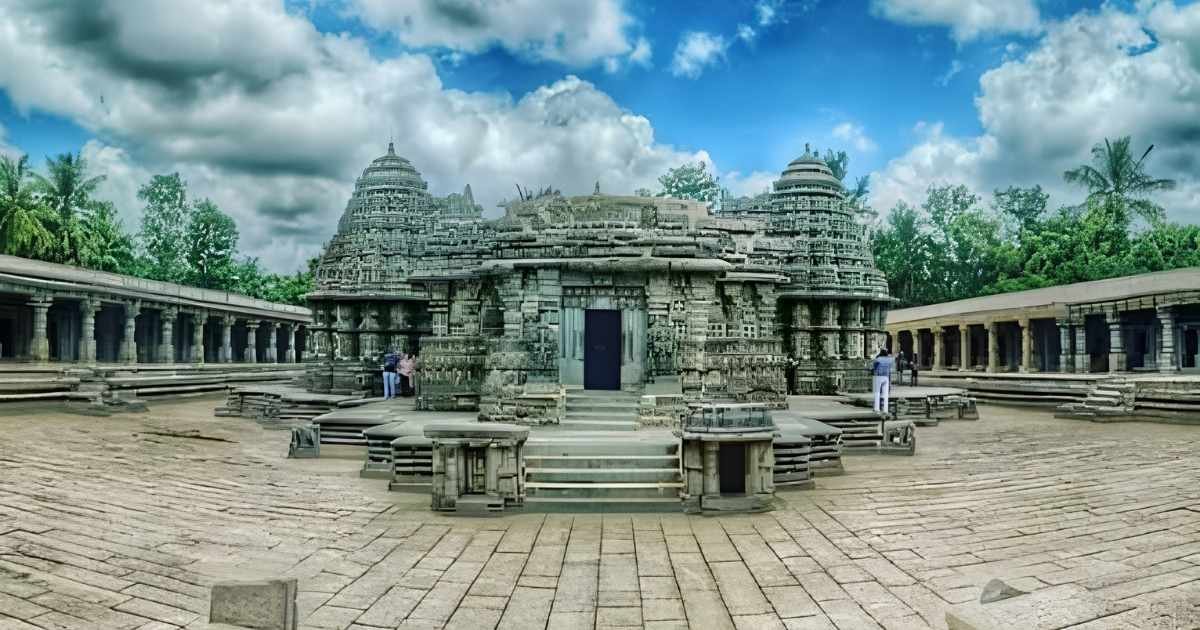
Few temples in India are both a UNESCO World Heritage Site and a place where priests still perform daily puja. The Chennakeshava Temple in Belur is one of them. You can admire 900-year-old stone carvings in the morning and join an evening aarti on the same day.
This guide covers timings, darshan types, ticket prices, sevas, festivals, dress code and routes. Where sources disagree, I say so, because temple schedules and prices change.
Belur Temple
The Chennakeshava Temple stands in Belur, Hassan district, Karnataka. It is dedicated to Vishnu as Chennakeshava, which means “handsome Keshava.” It is also called the Keshava or Vijayanarayana Temple.
Quick facts:
- Location: Belur town, Hassan district, Karnataka 573115
- Deity: Chennakeshava (Vishnu), about 6 feet tall, with consorts Sridevi and Bhudevi
- Built by: King Vishnuvardhana of the Hoysala dynasty
- Year: 1117 CE
- River: On the bank of the Yagachi
- Status: Active Vaishnava temple and UNESCO site (2023)
- General darshan: Free
The main shrine faces east and sits on a raised platform. The sanctum has a star-shaped plan. Smaller shrines for Goddess Sowmyanayaki, Andal and the Kappe Chennigaraya Temple sit within the same compound.
History of Belur Temple
King Vishnuvardhana commissioned the temple in 1117 CE. Belur was an early Hoysala capital at the time. An inscription on the east wall states that he built it for the deity Vijayanarayana.
Historians offer a few reasons for its construction:
- A victory monument. Tradition links it to his win over the Cholas at Talakad.
- Political rivalry. Some scholars suggest he wanted to outshine his Western Chalukya overlord.
- Religious change. Another theory ties it to his shift toward Sri Vaishnavism under Ramanujacharya.
A local legend adds a gentler story. The king is said to have dreamed of Lord Keshava while staying near the Baba Budan hills. Devotees believe the Lord is still visiting his consort on those hills, who was left behind when the temple was built at Belur.
The main temple was consecrated in 1117 CE. The carving and the wider complex kept growing for about a century. Researchers have found 118 inscriptions in the complex, spanning 1117 CE to the 18th century. They record grants, artists and repairs.
The temple suffered damage during wars and invasions and was repaired many times. In 2023, UNESCO listed it with the Halebidu and Somanathapura temples as the “Sacred Ensembles of the Hoysalas.”
Belur Temple Timing
The most repeated schedule is:
| Day | Opening | Closing |
| Monday to Sunday | 7:30 AM | 7:30 PM |
Other pages list 7:00 AM to 8:00 PM, and one older page gives 9:00 AM to 9:00 PM. The temple hours stay the same on all days of the week. On festival days, the temple may open earlier and close later.
Because pages disagree, plan to arrive between 8:00 AM and 6:00 PM. That window sits inside every version of the timings.
Darshan Timings of Belur Chennakeshava Temple
Darshan runs in two main sessions. The commonly reported pattern is:
| Session | Time |
| Morning darshan | 7:30 AM to 1:00 PM |
| Short break | 1:00 PM to 1:30 PM |
| Evening darshan | 1:30 PM to 7:30 PM |
A second version in circulation shows morning darshan until 1:30 PM and evening darshan from 4:00 PM to 8:00 PM. A third lists 7:00 AM to 1:00 PM and 2:00 PM to 8:00 PM.
Rituals during the day include:
- Morning aarti: About 7:00 AM to 7:30 AM
- Abhisheka and flower alankara: Roughly 7:00 AM to 1:00 PM
- Afternoon aarti: About 12:00 PM to 1:00 PM
The best time for a calm visit is between 7:30 AM and 9:30 AM. Midday gets hot and crowded with tour groups. For soft light on the carvings, go in the late afternoon.
Read More: Parli Vaijnath Temple: Which Jyotirlinga Is Real? Full Guide
Online Booking Process for Chennakeshava Temple Darshan
General darshan is free and walk-in. You do not need a ticket to enter. Some pages say special and VIP darshan can be booked online, while others say no online booking exists. Treat online booking as possible but unconfirmed.
If you want to try, the steps reported are:
- Open the official Sri Chennakeshava Swamy Temple website.
- Go to the “Darshan Booking” section.
- Choose General, Special or VIP darshan.
- Pick your date and time slot.
- Enter your details and pay any fee shown.
- Download the e-ticket and carry it with an ID.
Check the website address carefully, since several unofficial sites copy the temple’s name. If booking is not live, buy tickets at the counter on the day.
Darshan & Seva Ticket Prices 2026
Reported prices:
| Type | Price |
| General darshan | Free |
| Special darshan | ₹50 |
| VIP darshan | ₹100 |
| Pooja fees | ₹200 to ₹500 |
These figures come from one source and may not match the counter. Ask for a receipt for every paid seva.
Rituals and Sevas Price List
Seva prices vary across pages. Use this as a rough guide and confirm at the office:
| Seva | Reported price |
| Tenginakai (coconut) Mangalarati | ₹5 |
| Tirtha Kaayi or Hannu Thuppa | ₹10 |
| Tulasi Archana | ₹15 to ₹20 |
| Garuda Prasada | ₹20 |
| Kumkuma Sahasranama | ₹100 |
| Tulasi Sahasranama | ₹100 |
| Hanneradu Mangalarati | ₹750 |
| Dolotsava | ₹1,000 |
| Moola Devara Abhisheka | ₹2,000 to ₹2,500 |
Other services exist too, such as Upanayana, Choula Karma and vehicle pooja. The Ganapati shrine and the Sowmyanayaki shrine also have their own sevas. Festival sevas cost more, so ask for the list when you go.
Read More: Bhadkeshwar Mahadev Temple Dwarka: Timings, History & Darshan Guide (2026)
Major Festivals Celebrated at Chennakeshava Temple
Festival dates follow the Hindu calendar, so they move each year. Check the date closer to your trip.
Chennakeshava Rathotsava (Car Festival)
Rathotsava is the biggest festival. It falls in March or April, about 12 days after Ugadi. The processional idol rides a huge wooden chariot for two days. On the first day the chariot circles the eastern side. On the second day it covers the remaining route.
A fair, called a jatra, runs for around ten days. Expect big crowds, folk shows and many stalls in the streets around the temple.
Ugadi
Ugadi marks the Kannada New Year. The temple holds special pujas and decorations. Many families come to start the year with darshan. It also sets the date for Rathotsava, so it is a good time to plan ahead.
Makar Sankranti
This harvest festival falls in mid-January. Devotees offer prayers and traditional foods. The temple sees steady crowds and a festive mood, but it is calmer than Rathotsava.
Vaikuntha Ekadashi
Vaikuntha Ekadashi falls in the Dhanurmasa period, usually December or January. Devotees believe the gates of Vishnu’s abode open on this day. The temple has extended darshan hours and long queues. Arrive very early if you plan to attend.
How to Reach Sri Chennakeshava Swamy Temple, Belur
By road: Belur is about 220 km west of Bengaluru. The drive takes roughly 3.5 to 4.5 hours via NH75, the Bengaluru to Mangaluru highway, through Hassan. Hassan is about 35 to 40 km away. Halebidu is 16 km, Chikkamagaluru about 23 to 25 km, and Mysuru about 160 km.
By bus: KSRTC and private buses connect Belur with Hassan, Bengaluru, Mysuru and nearby towns. Direct options vary, so many travellers take a bus to Hassan and then another bus or taxi to Belur.
By train: Belur has no railway station. The nearest major station is Hassan Junction, about 35 to 40 km away. Trains connect Hassan with Bengaluru, Mysuru and Mangaluru. Chikkamagaluru has a smaller station.
By air: There is no airport in Belur. The nearest are:
- Mangaluru, about 135 to 160 km away
- Bengaluru, about 220 km away
Hire a taxi from either airport. Allow a full day if you fly in.
Belur Temple Dress Code
There is no strict dress code, but modest clothing is expected. Traditional attire is preferred, especially on festival days.
Suggested attire:
- Men: Dhoti, or trousers with a shirt
- Women: Saree, salwar kameez or a long skirt
- Children: Comfortable, covered clothing
Etiquette to follow:
- Remove footwear outside. A cloakroom outside the temple keeps shoes for free or a small fee.
- Avoid shorts, sleeveless tops and very short skirts.
- Photography is generally allowed in the courtyards, but not inside the sanctum. A camera fee may apply.
- Do not use flash near the carvings.
- Do not touch or climb on the sculptures.
Belur Temple Contact Number
A phone number reported for the temple trust office is 081772 22218. Belur’s telephone code, 08177, matches. The source is dated, so call to check before you rely on it.
Postal address: Sri Chennakeshava Swamy Temple, Kote Road, Belur town, Hassan district, Karnataka 573115.
Halebidu Temple Timings
Most visitors combine Belur with Halebidu, which is only 16 km away. The Hoysaleswara Temple is dedicated to Shiva and is maintained by the Archaeological Survey of India (ASI). It does not hold regular pujas like Belur does.
Reported details:
- Temple hours: Most pages say 6:30 AM to 9:00 PM. Some give 6:30 AM to 6:30 PM.
- Museum: About 9:00 AM to 5:00 PM, with a day off on one weekday
- Entry: Free on many pages, but some say an ASI e-ticket may apply. Check the ASI portal.
- Parking: ₹50 to ₹70 reported
- Guides: Around ₹500 reported
Plan two to three hours at each site. A Belur morning and a Halebidu afternoon is an easy way to cover both.
Contact Information
- Temple: Sri Chennakeshava Swamy Temple, Belur
- Address: Kote Road, Belur town, Hassan district, Karnataka 573115
- Phone (reported): 081772 22218, confirm before calling
- Nearest city: Hassan, about 35 to 40 km
- Heritage status: UNESCO World Heritage Site (2023)
For booking and seva questions, use the temple office. For heritage rules in the wider complex, ask the ASI.
FAQ‘s
What are the Belur Temple darshan timings?
Most sources say 7:30 AM to 1:00 PM and 1:30 PM to 7:30 PM daily. Some list slightly different hours.
Is entry to Chennakeshava Temple free?
Yes, general darshan and entry are free. Special darshan, VIP darshan and sevas cost extra.
Can I book darshan or seva tickets online?
Some pages mention online booking for special or VIP darshan, while others say it is walk-in only. Confirm on the official site.
What is the best time of year to visit Belur Temple?
October to March has cooler weather. Rathotsava in March or April is best for festival lovers.
How far is Belur Temple from Bengaluru?
About 220 km, a drive of roughly 3.5 to 4.5 hours via NH75.
Is photography allowed inside the temple?
Photography is generally allowed in the courtyards and prohibited inside the sanctum. Avoid flash.
Is there a dress code at the temple?
No strict rule, but modest, traditional clothing is preferred. Footwear is removed outside.
What is the biggest festival at Belur Temple?
Rathotsava, the chariot festival, held in March or April about 12 days after Ugadi.
Final Thoughts
Belur is one of the rare places where history and worship share the same stones. You can study 12th-century Hoysala carvings, then step into the sanctum for a quiet darshan. Few experiences in Karnataka combine art and devotion so closely.
Plan to arrive by mid-morning, dress modestly and carry small cash for sevas. Confirm timings and prices the day before, since sources differ. If you can, add Halebidu on the same trip for a full Hoysala day.