
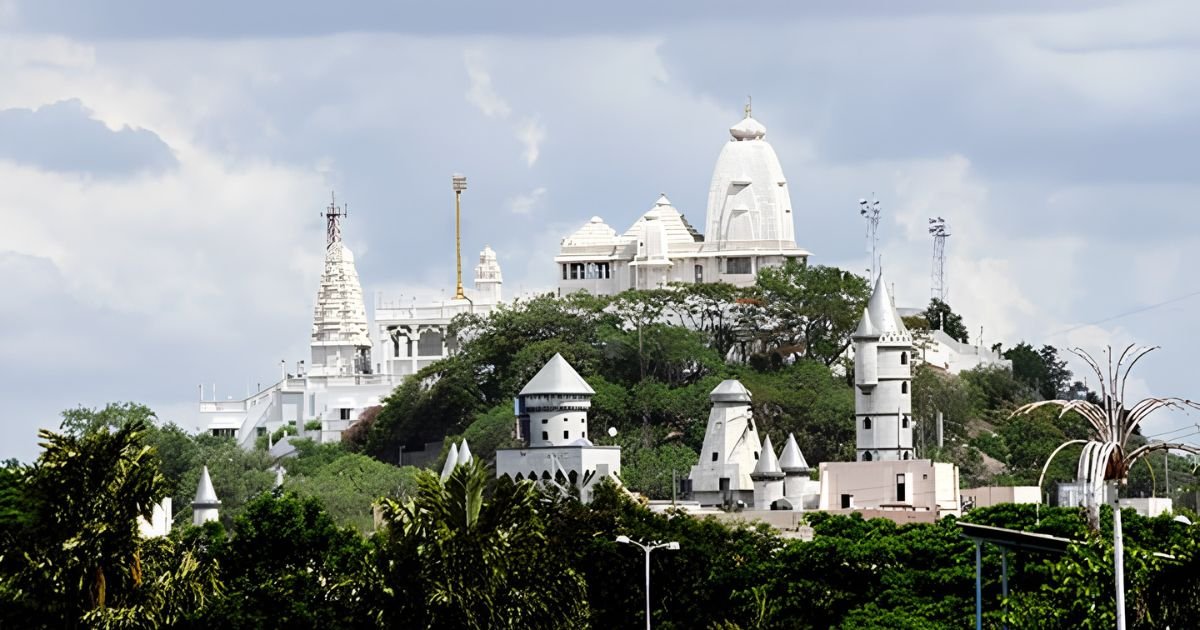
Tucked into the old quarters of Hyderabad, along the banks of the Musi River, the Kesari Hanuman Temple is one of the city’s most visited Hanuman shrines. Devotees from Jiyaguda, Karwan, and far beyond arrive daily to seek blessings from a deity known simply as Kesari, the saffron Hanuman.
This guide walks through the temple’s centuries-old history, its rituals, festival calendar, timings, and everything you need to plan a visit, including how the Jiyaguda, Karwan, and Begumpet shrines relate to one another.
Who is Lord Hanuman?
Lord Hanuman is the Vanara deity of the Ramayana, celebrated as the most devoted follower of Lord Rama. Born to Anjana and Kesari in the forests of Kishkindha, he is worshipped across India as a symbol of strength, courage, and unwavering devotion.
Also known as Anjaneya, Bajrangbali, and Sankat Mochan (remover of troubles), Hanuman’s leap across the ocean to Lanka in search of Sita made him an enduring symbol of determination. Millions of devotees visit Hanuman temples every Tuesday and Saturday, the days considered most auspicious for his worship.
Significance of “Kesari” Hanuman
The name “Kesari” carries a double meaning that many visitors don’t realise. Kesari was Hanuman’s father, the Vanara king of Kishkindha, so invoking “Kesari Hanuman” is a way of honouring Hanuman through his lineage.
At the same time, “kesari” is the Hindi and Sanskrit word for saffron. The idol at this temple is coated in a deep saffron-orange hue, a colour traditionally associated with courage, sacrifice, and spiritual energy in Hindu worship. Devotees often offer sindoor (vermilion) and saffron-tinted oil during rituals, reinforcing this connection between name, colour, and devotion.
History of Kesari Hanuman Temple
The temple’s roots trace back to the 17th century, making it well over 300 years old, with some local accounts placing its origins closer to 400 years ago. It was established by Samartha Ramdas Swami, a revered Maharashtrian saint and the spiritual guru of Chhatrapati Shivaji Maharaj.
Samartha Ramdas Swami founded the Samartha Sampradaya, a spiritual tradition rooted in devotion to Rama and Hanuman. During a period when Shivaji was resisting Mughal expansion under Aurangzeb, the saint is believed to have travelled widely across the subcontinent, consecrating Hanuman idols at strategic locations. This site on the Musi riverbank was one of them.
Read More: Cheruvugattu Shiva Temple Near Hyderabad: A Complete Guide
The Ramayana Connection
According to the temple’s sthala purana (local legend), Lord Hanuman himself visited this spot during the Ramayana era while searching for Sita after her abduction. He is said to have bathed in the Musi River and performed his daily worship of Lord Rama right here.
This legend gives the temple a spiritual lineage that predates its physical construction, connecting a real historical shrine to the mythological journey of the Ramayana itself.
Temple Architecture
The temple’s most striking feature is its ornately carved entrance arch, decorated with sculpted depictions of Hindu deities in vivid, multi-coloured detail. At the Begumpet branch, this takes the form of a small but elaborate Rajagopuram (tower gateway).
Inside, the sanctum is modest in scale compared to grand South Indian temples, but the saffron-hued Hanuman idol is the clear focal point. The riverside setting at the main Jiyaguda shrine adds a quiet, contemplative atmosphere that many devotees say is missing at larger, busier temples in the city.
Spiritual Significance
For devotees, this temple represents protection, strength, and the removal of obstacles. Hanuman worship is closely tied to overcoming fear, illness, and hardship, and many visitors come specifically during difficult periods in life.
The temple is also known for Gauseva, or cow service, considered one of the most meritorious acts in Hindu tradition. Serving cows here is believed to bring blessings equivalent to worshipping Hanuman directly, since cows are treated as sacred in the same devotional framework.
Rituals and Poojas
Daily worship at the temple follows a fairly consistent pattern, with special poojas added during festivals. Common rituals include:
- Abhishekam: Ritual bathing of the idol with oil, water, and sindoor.
- Hanuman Chalisa recitation: Group and individual recitations, especially on Tuesdays and Saturdays.
- Gauseva: Feeding and serving cows kept near the temple premises.
- Archana: Personalised prayers offered in the devotee’s name.
- Saffron and oil offerings: A gesture directly linked to the “Kesari” identity of the deity.
Special poojas are conducted on festival days and can involve larger community gatherings, so it’s worth checking with temple staff in advance if you want to participate in a specific ritual.
Festivals Celebrated
Beyond the flagship Hanuman Jayanti celebration, the temple hosts a full calendar of Hindu festivals throughout the year, including:
- Hanuman Jayanti (the biggest celebration, with lights, flowers, and large crowds)
- Sri Rama Navami
- Makara Sankranti
- Vasanta Panchami
- Ratha Saptami
- Maha Shivaratri
- Holi
- Ugadi
- Chaitra Navaratri
- Sri Krishna Janmashtami
- Vinayaka Chavithi (Ganesh Chaturthi)
- Durga Sharan Navaratri
- Bathukamma
Hanuman Jayanti draws the largest turnout by far, with the temple decorated in bright lighting and fresh flowers for days.
Read More: Naga Devatha Temple Tirumalagiri Guide: History, Timings & Naga Dosha Remedies
Kesari Hanuman Temple Timings
The temple generally follows a split schedule common to most Hindu temples in the region:
- Morning darshan: 6:00 AM to 11:30 AM
- Evening darshan: 4:00 PM to 8:30 PM or 9:00 PM, depending on the branch
Timings can shift slightly during major festivals like Hanuman Jayanti, when the temple often stays open longer to accommodate crowds. It’s a good idea to confirm current timings locally or by phone before planning a visit on a festival date.
Best Time to Visit
Early morning, right after the 6 AM opening, tends to be the quietest and most peaceful time for darshan. If you prefer a livelier atmosphere with more devotional energy, Tuesday and Saturday evenings are ideal, since these are considered Hanuman’s most auspicious days.
For a truly memorable experience, plan your visit around Hanuman Jayanti. Expect larger crowds, but also the temple at its most vibrant, with decorations, community singing, and a strong festive atmosphere.
How to Reach Kesari Hanuman Temple
The temple sits in Jiyaguda, within the Karwan suburb of old Hyderabad, close to the Musi River.
By train:
- Secunderabad Railway Station: approximately 5 km away
- Hyderabad Nampally Railway Station: approximately 8 km away
- Kachiguda Railway Station: approximately 10 km away
By metro:
There’s no metro station directly in Jiyaguda or Karwan, so you’ll need an auto or cab for the last stretch. The MGBS (Mahatma Gandhi Bus Station) interchange, connecting the Red and Green Lines, is one of the closer options, roughly a 15 to 20 minute auto ride away depending on traffic.
By bus:
The Jiyaguda/Karwan bus stand is right next to the temple, served by several TSRTC routes connecting to Secunderabad and other parts of the city.
By road:
Taxis and cabs are the most convenient option for most visitors, typically taking 30 minutes to an hour from various parts of Hyderabad depending on traffic conditions.
Nearby Attractions
Karwan and Jiyaguda are home to several other historic sites worth combining with your temple visit:
- Shree Vithalnathji Temple: A well-known Vaishnavite shrine in the same neighbourhood.
- Santoshi Mata Temple: Located close to the Kesari Hanuman Temple.
- Lord Narasimha Swamy Temple: Another old temple in the Jiyaguda area.
- Ranganathaswamy Temple: Believed to date from the Nizam era, popular for Vaikunta Ekadashi celebrations.
- Golconda Fort and Charminar: A short cab ride away, ideal for combining spiritual and historical sightseeing in one trip.
Devotee Experiences
Regular visitors often describe the temple’s atmosphere as calm and grounding compared to more commercialised pilgrimage sites in the city. Many devotees specifically mention the Gauseva ritual as a meaningful part of their visit, noting how directly they can participate rather than simply observing.
Long-time devotees also point to Tuesday evenings as the temple’s most spiritually charged time, when the sound of Hanuman Chalisa recitations fills the courtyard and the saffron-lit idol takes on a particularly striking appearance.
Travel Tips
A few practical points to keep your visit smooth:
- Dress modestly, as is customary at most Hindu temples.
- Footwear must be removed before entering the sanctum area.
- Avoid the Tuesday and Saturday evening rush if you prefer a quieter darshan.
- Carry small denomination cash for offerings and prasad.
- Photography near the sanctum is often restricted, so check with temple staff first.
- During monsoon season, be cautious near the riverside pathway close to the temple.
Kesari Hanuman Temple Nearest Metro Station
There isn’t a metro station within walking distance of the temple. The closest practical option is MGBS (Mahatma Gandhi Bus Station), an interchange station on both the Red and Green Lines of the Hyderabad Metro. From there, an auto-rickshaw or cab covers the remaining distance in roughly 15 to 20 minutes, traffic permitting. If you’re travelling by metro, budgeting extra time for this last-mile connection is worth doing in advance.
Read More: Komuravelli Mallanna Temple: History, Timings, Significance & Complete Visitor Guide
Kesari Hanuman Temple Jiyaguda
The Jiyaguda Kesari Hanuman Temple is the original and most prominent of the temples covered in this guide. Located on the banks of the Musi River in the Jiyaguda locality, it was the first shrine consecrated by Samartha Ramdas Swami and remains the spiritual centre for devotees across the city. Its address falls under Karwan Sahu, Karwan East, Hyderabad, with the pincode 500006.
Kesari Hanuman Temple Jiyaguda Timings
The Jiyaguda temple follows the standard schedule of 6:00 AM to 11:30 AM in the morning and 4:00 PM to 9:00 PM in the evening. As with any temple, timings can be extended during major festivals, so calling ahead before a festival visit is a good idea.
Kesari Hanuman Temple Begumpet
A related but separate shrine exists in Begumpet, near Hyderabad Public School. This temple was also established under the Samartha Ramdas Swami tradition and shares the same devotional lineage, though it functions as an independent temple with its own priests and schedule.
Its standout feature is a beautifully sculpted entrance arch and a small Rajagopuram decorated with brightly painted deity figures. The Katta Maisamma Temple sits right next to it, making the area a small but meaningful pilgrimage stop of its own. Its timings mirror the main temple closely, running from 6:00 AM to 11:30 AM and 4:00 PM to 8:30 PM.
Kesari Hanuman Temple Karwan
Here’s where a lot of search confusion comes from: the “Karwan” Kesari Hanuman Temple and the “Jiyaguda” Kesari Hanuman Temple are the same temple. Jiyaguda is simply a locality within the broader Karwan suburb of old Hyderabad, so both names point to the identical shrine on the Musi riverbank. If you’ve seen these referred to as two different temples online, that’s a common misunderstanding worth clearing up before you plan your visit.
FAQs
Who built the Kesari Hanuman Temple?
It was established by Samartha Ramdas Swami, a 17th century Maharashtrian saint and spiritual guru of Chhatrapati Shivaji Maharaj.
Why is the temple called “Kesari” Hanuman?
“Kesari” refers both to Hanuman’s father and to the saffron colour of the idol worshipped here.
What are the temple’s daily darshan timings?
Typically 6:00 AM to 11:30 AM in the morning and 4:00 PM to 8:30 or 9:00 PM in the evening.
Which days are considered most auspicious to visit?
Tuesdays and Saturdays are traditionally the most auspicious days for Hanuman worship at this temple.
Is the Jiyaguda temple the same as the Karwan temple?
Yes, Jiyaguda is a locality within Karwan, so both names refer to the same original temple.
How far is the temple from Hyderabad’s main railway stations?
Roughly 5 km from Secunderabad, 8 km from Nampally, and 10 km from Kachiguda station.
What is the significance of offering saffron at this temple?
Saffron offerings directly honour the “Kesari” identity of the deity, symbolising courage and devotion.
Is there an entry fee for the temple?
No, entry and darshan at the temple are free of charge for all visitors.
Can I combine this temple visit with other nearby attractions?
Yes, nearby temples like Shree Vithalnathji and Ranganathaswamy, plus Golconda Fort, pair well with this visit.
Is the temple open on Sundays?
Yes, the temple remains open on Sundays following its regular daily darshan timings.
Conclusion
The Kesari Hanuman Temple offers something increasingly rare in a fast-growing city: a genuinely old, unhurried spiritual space with a history that stretches back over three centuries. Whether you’re drawn by the Ramayana legend, the Gauseva tradition, or simply the search for a quiet place to pray, the Jiyaguda shrine and its sister temple in Begumpet both deliver a meaningful, grounded devotional experience.
If you’re planning a visit, aim for an early morning or a Tuesday evening, bring a little patience for the last-mile travel, and take the time to explore the surrounding temples in Karwan while you’re there.