
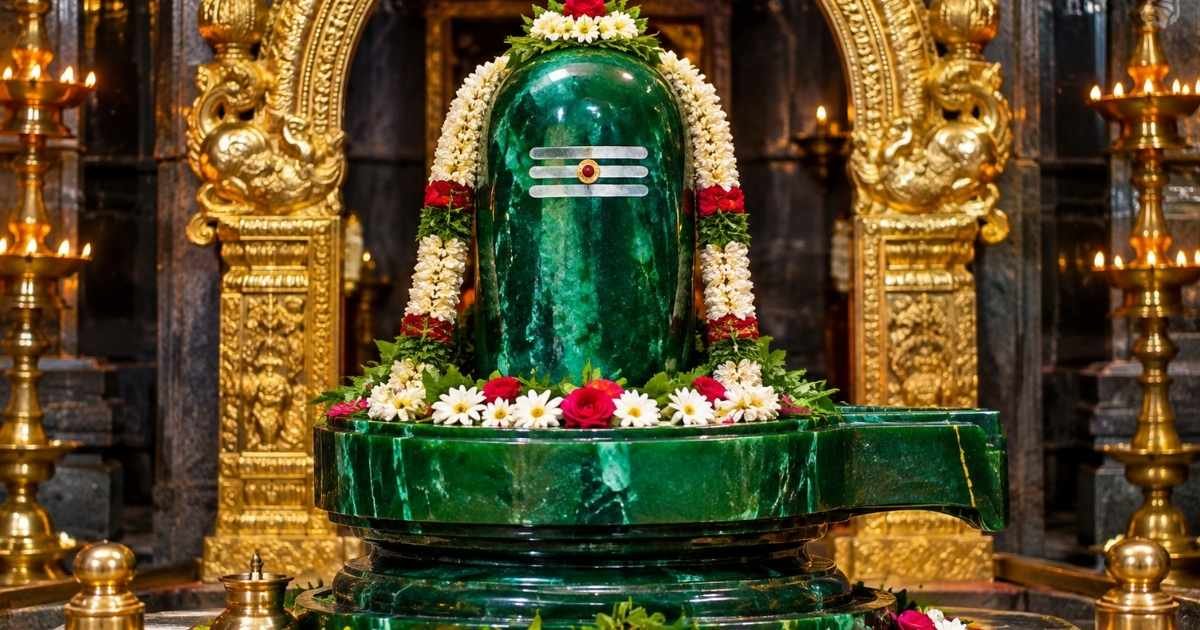
Tucked away in a quiet village near Hyderabad stands a temple that has quietly become one of Telangana’s most talked about spiritual discoveries. The Marakatha Shiva Lingam Temple is not just another Shiva shrine. It houses a lingam believed to be made of emerald, a stone that Hindu tradition rarely associates with deity worship at this scale.
For centuries, this temple sat forgotten. Today, it draws devotees, historians, and curious travelers who want to witness something genuinely rare: a Shiva lingam with a green, glass-like glow that many say changes character during rituals.
This guide covers everything you need to know before visiting, including the temple’s history, its rediscovery, darshan timings, rituals, and the beliefs that keep pilgrims returning year after year.
Sacred Significance of “Marakatha” Shiva Lingam
The word Marakatha comes from Sanskrit and simply means emerald. In Vedic astrology, emerald is linked to the planet Budha, or Mercury, which governs intelligence, communication, and mental clarity.
A lingam associated with this gemstone is considered unusual because most Shiva lingams found across India are carved from black stone, granite, or marble. A naturally occurring or crafted emerald lingam is exceptionally rare, which is part of why this temple has captured so much attention.
Devotees believe that worshipping this particular form of Shiva brings mental peace, sharpens decision making, and removes confusion from one’s path. Because Mercury also governs speech and communication, many visitors pray here before important exams, interviews, or business decisions.
Marakatha Shiva Lingam Temple Speciality
The single biggest draw of this temple is the lingam itself. Its greenish tone is unlike the deep black or grey stone found in most Shaiva temples across South India.
Several devotees describe the lingam appearing to shift in color and brightness during abhishekam, the ritual bathing ceremony. Some say it takes on a translucent, glass-like sheen when water or milk flows over its surface, especially under early morning light.
Here is what makes this temple stand apart from typical Shiva shrines:
- A lingam believed to contain or be carved from emerald, a material almost never used in temple deities.
- A history that stretches back nearly a thousand years, with inscriptions confirming its ancient origin.
- A modern rediscovery story that reads like a piece of living folklore.
- A peaceful, rural setting free from the crowds and noise typical of larger city temples.
- Guardian deities, including Kalabhairava Swamy and a serpent deity, worshipped before the main sanctum.
For many pilgrims, the combination of rarity, history, and quiet devotion is what makes a visit here feel different from a typical temple trip.
Read More: Khatu Shyam VIP Darshan 2026: Price, Timings & Booking
Marakatha Shiva Lingam Temple Shankarpally Timings
The temple follows a schedule designed around traditional Shaiva worship hours. Most listings place the temple’s opening hours between early morning and evening, allowing devotees to catch both the sunrise abhishekam and the evening aarti.
General timing pattern followed at the temple:
- Morning darshan: around 6:00 AM to 12:00 PM
- Evening darshan: around 12:00 PM to 6:00 PM
Some travel guides note an extended window from 5:00 AM, which suits devotees who prefer to arrive before sunrise for a quieter, more personal experience. Since rural temple schedules can shift slightly around festivals, it is wise to confirm timings locally in Shankarpally or Chandippa before planning a long trip.
Marakatha Shiva Lingam Temple Khajaguda
Some online searches associate this temple with Khajaguda, a locality closer to Hyderabad’s outer ring road. This connection likely comes from travelers using Khajaguda as a reference point or transit route while heading toward Shankarpally.
The actual temple, however, is located further out in Chandippa village, within Shankarpally Mandal, not within Khajaguda itself. If you are navigating from Hyderabad, treating Khajaguda or Shankarpally as a midway landmark can help you plan the route, but your final destination remains Chandippa village.
Marakatha Shiva Lingam Temple Location
The temple is officially known as the Chandippa Sri Marakata Shivalinga Someshwara Swamy Temple. It sits in Chandippa village, within Shankarpally Mandal, Ranga Reddy District, Telangana, with the postal code 501203.
Key location details:
- Distance from Hyderabad: approximately 35 kilometers
- Nearest town: Shankarpally
- Approximate coordinates: 17.46277° N, 78.13333° E
- Access: reachable by private vehicle, taxi, or shared auto from Shankarpally town
The surrounding landscape is rural and calm, with open fields and a slower pace of life. Many visitors say this setting adds to the temple’s spiritual atmosphere, offering a contrast to the busier temples inside Hyderabad city limits.
Marakatha Shiva Lingam History & Rediscovery
Ancient Origins
Historical inscriptions suggest the original temple structure dates back to the reign of the Western Chalukya king Vikramaditya VI, who ruled from around 1076 to 1126 AD. Records point to a consecration date near 23 October 1101 AD, along with land grants made to support temple rituals and upkeep.
For a temple this old to survive in any form nearly a thousand years later is significant. It places the site within a broader tradition of Chalukyan temple building, an era known for detailed stone carving and strong royal patronage of Shaiva worship.
Read More: Shyam Mandir Kachiguda Hyderabad 2026: Timings, Darshan, Pooja & Complete Guide
Modern Revival
Over the centuries that followed, the temple slipped into obscurity. Like many rural shrines across India, it fell into disrepair, and its significance was largely forgotten by later generations.
That changed in the early 2000s, when a devotee named Naresh Kumar noticed something unusual during a routine abhishekam. Light reflecting off the lingam produced a distinct greenish hue, unlike anything typically seen on a stone Shiva idol.
Community Efforts and Restoration
Naresh Kumar’s observation eventually led to an article published in the Andhra Bhoomi newspaper, which brought public attention to the site. Local devotees, historians, and community members took interest, and restoration work followed around 2011 to 2012.
Since then, the temple has been rebuilt with renewed rituals, regular pooja schedules, and growing footfall from devotees across Telangana and beyond.
The Deity: Someshwara Swamy (Shiva)
The presiding deity is worshipped as Someshwara Swamy, a traditional name for Lord Shiva used widely across Telangana and Andhra Pradesh temples. The name reflects Shiva’s role as Someshwara, or lord associated with the moon, tying into his broader identity as the cosmic ascetic and destroyer of ignorance.
The emerald lingam serves as the direct representation of this form, making the sanctum sanctorum the spiritual heart of the entire complex.
Temple Architecture & Layout
The temple follows a modest, traditional South Indian layout rather than the grand, heavily carved structures seen at larger Chalukyan sites. Its architecture reflects both its ancient roots and its recent restoration.
Notable architectural features include:
- A main sanctum, or garbhagriha, housing the emerald Shiva lingam
- An outer mandapa where devotees gather before entering the inner shrine
- Subsidiary shrines for guardian deities near the entrance
- Simple stone and concrete construction reflecting its restored, rather than original, structure
Because the temple prioritizes function and worship over ornate decoration, visitors often describe the atmosphere as humble and grounded rather than visually overwhelming.
Read More: Naga Devatha Temple Tirumalagiri Guide: History, Timings & Naga Dosha Remedies
Rituals, Sevas & Worship Practices
Daily worship at the temple follows familiar Shaiva traditions, centered around the lingam’s ritual care and devotee participation.
Common rituals include:
- Abhishekam, or ritual bathing of the lingam with water, milk, or other sacred substances
- Archana, involving chanting of Shiva’s names alongside flower offerings
- Aarti performed during both morning and evening hours
- Personal prayers and offerings made directly at the sanctum
Before entering the main shrine, many devotees first pay respects to Kalabhairava Swamy and a serpent deity positioned near the entrance, both considered protectors of the temple’s sacred energy.
Marakatha Shiva Lingam Temple Timings
For quick reference, here is the general daily schedule followed at the temple:
- Morning session: 6:00 AM to 12:00 PM
- Evening session: 12:00 PM to 6:00 PM
Some sources list an earlier opening at 5:00 AM. Devotees planning a visit around a major festival should call ahead or check with locals in Shankarpally, since hours can extend during Maha Shivaratri and other significant occasions.
Festivals & Cultural Events
The temple’s calendar naturally centers around major Shaiva festivals, with Maha Shivaratri standing out as the most significant.
Key occasions observed at the temple:
- Maha Shivaratri, drawing the largest crowds of devotees each year
- Kartik Masam, considered an auspicious month for Shiva worship
- Mondays, treated as a weekly special day for Shiva devotees across the Shaiva tradition
- Specific lunar phases, believed by some devotees to carry added spiritual merit
During Maha Shivaratri, the temple often extends its hours to accommodate an overnight vigil, a practice common at Shiva temples across India.
Myths, Beliefs & Devotee Experiences
Much of the temple’s popularity has grown through word of mouth and personal devotee accounts rather than formal documentation. These stories form an important part of its living identity.
Common beliefs and experiences shared by visitors:
- The lingam appears to shift color and clarity during abhishekam, especially in early morning light.
- Prayers offered here are believed to bring mental clarity and reduce confusion in decision making.
- Many devotees report a strong sense of calm and stillness upon entering the sanctum.
- Some visitors associate the temple with improved focus before exams, interviews, or major life decisions, linking this to the lingam’s connection with Mercury.
These beliefs are part of oral tradition and personal faith rather than verified historical fact, but they remain central to why so many devotees make the journey.
Read More: Komuravelli Mallanna Temple: History, Timings, Significance & Complete Visitor Guide
Spiritual Philosophy Behind Shiva Lingams
In Hindu philosophy, the Shiva lingam is not a literal image of a deity but a symbol of the formless, infinite nature of consciousness. It represents Shiva as the cosmic pillar of light, transcending shape and form entirely.
A lingam associated with a specific material, such as emerald, adds a layer of symbolic meaning on top of this formless representation. Emerald’s connection to Mercury introduces themes of intellect, learning, and inner balance into the worship experience.
This is why devotees often describe visits to this temple as feeling different from a standard Shiva darshan. The combination of ancient symbolism and rare material creates a worship experience many find uniquely reflective.
Marakatha Shiva Lingam Cost
There is no official entry fee to visit the Marakatha Shiva Lingam Temple, and darshan of the main deity is open to the general public without charge. Like most rural Hindu temples, the shrine operates through devotee donations rather than a fixed pricing structure.
A few points worth knowing:
- General darshan is free for all visitors.
- Specific sevas or poojas, when available, typically follow a donation-based system rather than a published price list.
- Costs can vary depending on the season, festival demand, and arrangements made directly with temple priests.
- It is best to confirm any seva charges in person or through local temple contacts before your visit, since online sources do not list a standardized fee schedule for this particular temple.
If accuracy matters for your trip, treat any online price figures for this specific temple with caution and verify directly on site.
Marakatha Shiva Lingam Benefits
Devotees associate several spiritual and personal benefits with worshipping at this temple, largely tied to Shiva’s broader attributes combined with emerald’s symbolic meaning.
Believed benefits include:
- Mental clarity and improved focus, linked to emerald’s association with Mercury
- Relief from confusion or indecision in personal and professional matters
- A sense of inner peace following abhishekam and prayer
- Protection and spiritual grounding, reinforced by the guardian deities at the entrance
- A deeper connection to Shaiva tradition through a rare and historically rich shrine
These benefits reflect devotee belief and traditional Hindu philosophy rather than scientific claims, and visitors are encouraged to approach them as part of personal faith.
FAQ’s
Where is the Marakatha Shiva Lingam Temple located?
It is located in Chandippa village, Shankarpally Mandal, Ranga Reddy District, Telangana, about 35 kilometers from Hyderabad.
What is the significance of the Marakatha (emerald) Shiva Lingam?
The lingam is believed to be made of or associated with emerald, a stone linked to Mercury, symbolizing clarity, intelligence, and mental balance.
When was the Chandippa Marakatha Shiva Lingam Temple built?
Inscriptions suggest the original temple was consecrated around 1101 AD during the reign of Chalukya king Vikramaditya VI.
What are the Marakatha Shiva Lingam Temple timings?
The temple generally opens from around 6:00 AM to 12:00 PM and again from 12:00 PM to 6:00 PM daily.
Is entry to the Marakatha Shiva Lingam Temple free?
Yes, general darshan is free, and the temple runs primarily through voluntary devotee donations.
Which day is best to visit the Marakatha Shiva Lingam Temple?
Mondays and Maha Shivaratri are considered especially auspicious for Shiva worship at this temple.
What is Panchamrutha Abhishekam and how much does it cost?
It is a ritual bathing ceremony using five sacred substances, and specific costs at this temple are donation based rather than fixed.
Who rediscovered the Marakatha Shiva Lingam?
A devotee named Naresh Kumar noticed the lingam’s unusual green reflection during abhishekam in the early 2000s, later publicized through a newspaper article.
What other deities are worshipped at this temple?
Kalabhairava Swamy and a guardian serpent deity are worshipped near the entrance before the main Shiva sanctum.
Is the temple crowded on normal days?
No, the temple sees light footfall on regular days, with crowds increasing mainly during Maha Shivaratri and other festival periods.
Final Thoughts
The Marakatha Shiva Lingam Temple stands as a rare example of history, faith, and rediscovery coming together in one small village shrine. From its Chalukyan origins to its modern revival through one devotee’s chance observation, the story behind this emerald Shiva lingam is as compelling as the deity itself.
Whether you visit for spiritual reasons, historical curiosity, or simply to witness something unusual, this temple offers a peaceful, meaningful experience away from the noise of city life.