
Let me get a few more facts: Angkor Wat origin story, oldest Hindu temple, Viraat Ramayan Mandir Bihar current status, and practical visitor info for Delhi Akshardham.I have enough research now. Let me quickly check the oldest Hindu temple claim.I now have enough solid, well-sourced material. Let me write the full article.Now I have all the facts I need. Let me write the article.# Biggest Hindu Temple in the World: Complete 2026 Guide
The size race between the world’s biggest Hindu temples confuses most readers. Some sites call Angkor Wat the largest. Others say Akshardham Delhi holds that title. Both answers are correct, just for different reasons. This guide breaks down every measurement, every record, and every major temple by area, height, and history, so you get one clear, accurate picture.
Guinness World Record Holder
The BAPS Swaminarayan Akshardham in New Delhi holds the official Guinness World Record for the World’s Largest Comprehensive Hindu Temple. The record was presented on 17 December 2007 by Guinness adjudicator Michael Whitty to His Holiness Pramukh Swami Maharaj in Ahmedabad.
The record applies to the temple building itself, not the full complex land area. This distinction matters. Angkor Wat covers far more land, but it is not a single “comprehensive temple building” in the way Guinness measured Akshardham.
Size, Height and Area Stats
Key numbers for Akshardham Delhi:
- Length: 356 feet
- Width: 316 feet
- Height: 141 feet
- Built-up area: 86,342 square feet
- Complex land area: around 100 acres
- Construction time: 5 years
- Artisans and volunteers involved: 11,000
- Steel used: none
The temple was consecrated on 6 November 2005 and dedicated to the nation by then President A.P.J. Abdul Kalam.
Read More: Kesari Hanuman Temple Hyderabad: History, Timings & Guide
Top 10 Biggest Hindu Temples List
Ranked by total complex area and global recognition:
- Angkor Wat, Cambodia. Around 402 acres. Originally a Hindu temple dedicated to Vishnu.
- BAPS Swaminarayan Akshardham, Robbinsville, New Jersey. 183 to 185 acres, 191 feet high.
- BAPS Swaminarayan Akshardham, New Delhi. Around 100 acres complex, Guinness record holder for the temple building.
- Sri Ranganathaswamy Temple, Srirangam, Tamil Nadu. 156 acres. Largest functioning Hindu temple complex in the world.
- Belur Math, West Bengal. Around 40 acres. Blends Hindu, Islamic, and Christian design.
- Brihadeeswarar Temple, Thanjavur. 23 acre complex. Known as the Big Temple. A UNESCO World Heritage Site.
- Thillai Nataraja Temple, Chidambaram. Around 40 acres. Dedicated to Shiva as Nataraja.
- Annamalaiyar Temple, Tiruvannamalai. Around 25 acres. One of the largest Shiva temples by pure religious use area.
- Meenakshi Amman Temple, Madurai. 17 acres. Dedicated to Goddess Meenakshi.
- Prambanan Temple, Indonesia. The largest Hindu temple site in Indonesia and one of the biggest in Southeast Asia.
2nd Largest Hindu Temple in the World
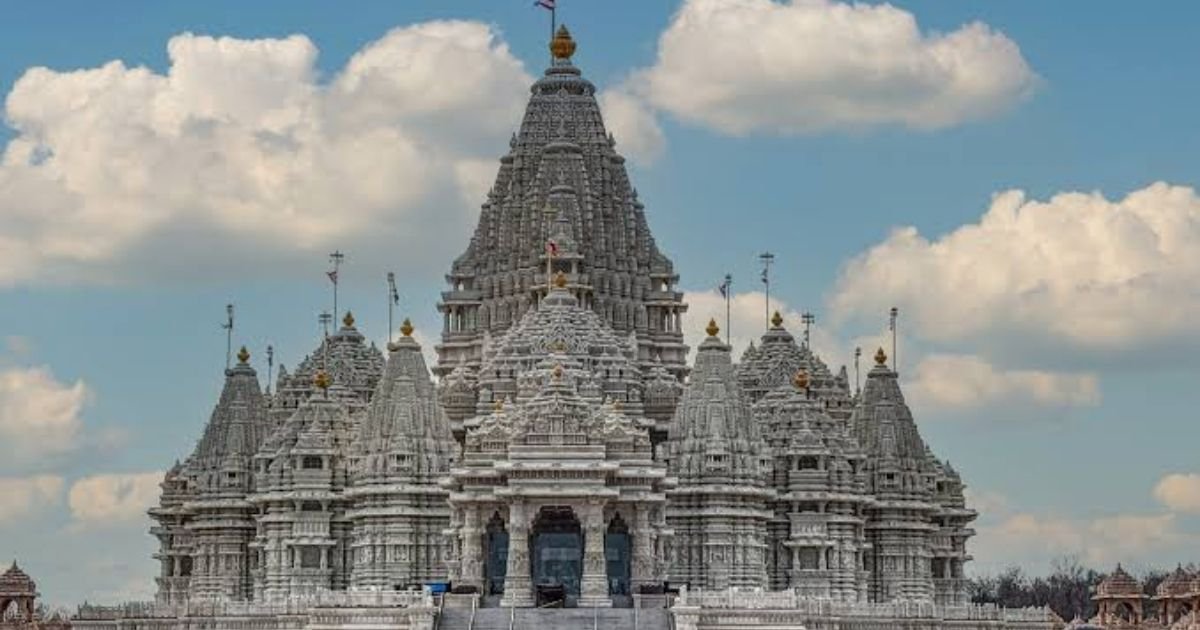
The BAPS Swaminarayan Akshardham in Robbinsville, New Jersey holds the title of second largest Hindu temple in the world. It is also the largest Hindu mandir in the entire Western Hemisphere.
Quick facts:
- Area: 183 to 185 acres
- Height: 191 feet
- Length and width: 255 feet by 345 feet
- Construction: 2011 to 2023, over 12 years
- Volunteers: more than 12,500
- Inaugurated: 8 October 2023
The mandir stands about 43 miles south of New York City and 37 miles north of Philadelphia. It uses hand carved marble, sandstone, granite, and limestone, sourced and shaped through a global volunteer effort.
1st Largest Hindu Temple in World
This is where most guides get confusing, so here is the clear breakdown.
By pure land area and monument scale, Angkor Wat in Cambodia is the largest religious structure on earth. It was built in the early 12th century by King Suryavarman II as a Hindu temple dedicated to Vishnu. It represents Mount Meru, the mythical home of the Hindu gods, and it remains the single biggest religious monument by area anywhere in the world.
There is one important detail readers should know. Angkor Wat gradually shifted from Hindu to Buddhist worship by the late 12th century, and it functions as an active Buddhist site today. Its architecture, layout, and founding purpose remain deeply Hindu, which is why almost every ranking still lists it as the largest Hindu temple by origin and design.
If you measure by an active, fully Hindu temple building with an official world record, that title goes to Akshardham Delhi, as confirmed by Guinness.
So the honest answer has two parts. Angkor Wat is the largest Hindu-origin religious structure in the world. Akshardham Delhi is the record holder for largest comprehensive Hindu temple still in active Hindu worship.
3rd Largest Hindu Temple in World
The BAPS Swaminarayan Akshardham in New Delhi ranks third when Angkor Wat and the New Jersey Akshardham are placed above it by area. It still holds a unique distinction. No other temple building on this list carries an official Guinness World Record for its construction.
Built without structural steel, using traditional Vastu Shastra and Sthapatya Shastra principles, the temple was completed in just five years. It remains one of the most visited monuments in Delhi, drawing around 70 percent of tourist footfall in the city.
Akshardham Delhi vs Gujarat Compared
Many readers mix up the Delhi Akshardham with the original Akshardham in Gandhinagar, Gujarat. Here is a side by side comparison.
| Feature | Gandhinagar, Gujarat | New Delhi |
| Inaugurated | 30 October 1992 | 6 November 2005 |
| Height | 108 feet | 141 feet |
| Length | 240 feet | 356 feet |
| Width | 131 feet | 316 feet |
| Complex area | 23 acres | around 100 acres |
| Material | Pink sandstone | Pink sandstone, white marble |
| Guinness record | No | Yes, 2007 |
The Gandhinagar temple came first and set the template. The Delhi temple was built larger in every dimension and later earned the Guinness title.
Read More: Maisigandi Maisamma Temple Hyderabad: History, Timings, Significance & Complete Visitor Guide
Largest Hindu Temple Outside India
The largest Hindu temple built outside India is the BAPS Swaminarayan Akshardham in Robbinsville, New Jersey, United States. It surpasses every other diaspora temple in the world by a wide margin.
New Jersey Akshardham Overview
The complex includes the main Akshardham mandir, a smaller traditional mandir completed in 2014, a welcome center, a museum, and event spaces. It features around 10,000 hand carved statues and statuettes, along with a stepwell filled with sanctified water gathered from 108 rivers across India, including the Ganges.
The site sits on land that spans roughly 180 to 200 acres depending on the source, making it one of the largest religious campuses of any faith in North America.
Angkor Wat Hindu Origin Story
Angkor Wat began as the state temple and eventual mausoleum of King Suryavarman II, who ruled the Khmer Empire from 1113 to around 1150 CE. Construction likely took about three decades.
The temple was dedicated to Vishnu and designed to mirror Mount Meru, the cosmic mountain of Hindu mythology. Five central towers represent its peaks, and the surrounding moat symbolizes the cosmic ocean.
In 1177, roughly 27 years after Suryavarman II died, Angkor was sacked by the Chams. A new king, Jayavarman VII, later restored the empire and shifted the capital nearby. Toward the end of the 12th century, Angkor Wat gradually transformed from a Hindu site into a Buddhist one, a transition that continues to define its religious identity today.
Oldest Hindu Temple in the World
Pinpointing a single “oldest” Hindu temple is difficult, since many ancient temples have been rebuilt multiple times over centuries. A few strong contenders stand out for continuous worship and surviving structure.
- Mundeshwari Temple, Bihar. Often cited as the oldest functioning Hindu temple in the world, with worship believed to have continued without interruption since around the 2nd or 4th century CE.
- Bhitargaon Temple, Uttar Pradesh. The oldest surviving brick Hindu temple with a full spire, built in the late 5th century CE during the Gupta period.
- Lad Khan and Durga Temples, Aihole, Karnataka. Among the earliest surviving stone temple structures in India, tied to the early Chalukya dynasty.
Each claim depends on what counts as “original structure” versus a site that has been rebuilt.
Mayapur ISKCON World’s Largest Temple
The Temple of the Vedic Planetarium, known as TOVP, is under construction in Mayapur, West Bengal, as the flagship project of ISKCON, the International Society for Krishna Consciousness.
Key facts:
- Expected height: around 370 feet at its highest point
- Main dome height: 198 feet
- Floor space: over 100,000 square feet dedicated to worship, spread across multiple floors
- Capacity: can hold more than 10,000 to 15,000 worshippers at once
- Cost: around 500 crore rupees
- Construction began: 1972, with major dome work finished in the mid 2010s
Once complete, TOVP is expected to house the largest dome of any religious structure in the world, along with a detailed model of the universe as described in the Srimad Bhagavatam.
World’s Largest Temple in Bihar
Bihar is home to another ambitious project, the Viraat Ramayan Mandir, developed by the Mahavir Mandir Trust in Patna’s Kesaria district. The plan aims to make it one of the largest Hindu temple complexes anywhere, potentially surpassing Angkor Wat in scale once fully finished.
The temple’s shivling was consecrated in January 2026 following Vedic rituals. Multiple shrines are planned across the complex, with completion expected during 2026.
Architecture and Construction Facts
Modern Akshardham temples follow ancient Hindu architectural texts, mainly the Sthapatya Shastra and Vastu Shastra. These texts guide proportions, orientation, and symbolism down to the smallest carved detail.
Common architectural features across these temples include:
- Multiple shikharas, or spires, symbolizing sacred mountains
- Intricately carved pillars depicting deities, animals, and mythological scenes
- Large open mandapams, or pavilions, for gatherings and rituals
- Symmetrical layouts aligned with cardinal directions
Materials Used, No Steel Build
A defining feature of Akshardham temples, both in Delhi and Gandhinagar, is the complete absence of structural steel. Builders use pink sandstone, white marble, and limestone instead, following traditional stone masonry methods designed to last for centuries. This construction style is meant to mirror how ancient temple builders worked, without modern steel reinforcement.
The Delhi Akshardham alone used around 11,000 artisans, while the New Jersey Akshardham brought in over 12,500 volunteers across 12 years of work.
Best Time to Visit Temple
The best months to visit most large Hindu temples in India, including Akshardham Delhi and Sri Ranganathaswamy, run from October to March. Cooler weather makes outdoor walking through gardens and courtyards far more comfortable. Avoid peak summer months from April to June, when daytime temperatures in Delhi and Tamil Nadu climb sharply.
Temple Timings and Entry Fee
Akshardham Delhi timings and fees, based on official visitor information:
- First entry: 9:30 AM
- Last entry: 6:30 PM
- Exhibition hours: 10:00 AM to 5:30 PM
- Closed: every Monday
- Complex and mandir entry: free, no ticket needed
- Exhibition ticket: around 170 rupees for adults
- Musical fountain ticket: around 30 rupees for adults
- Children below 4 years: free entry to all sections
Prices and timings can shift slightly, so checking the official Akshardham website before a visit is a good habit.
Dress Code and Security Rules
The temple enforces a strict, modest dress code. Shoulders, chest, navel, and upper arms must stay covered. Lower wear must reach below the knee. Free sarongs are available at the entrance for visitors who arrive in shorts or sleeveless clothing.
Mobile phones, cameras, USB drives, and other electronic items are not allowed inside. A free cloakroom is available at the entrance for storing these items before the security check.
How to Reach by Transport
Akshardham Delhi sits on NH 24, right next to the Akshardham Metro Station on the Blue Line. The walk from the station to the temple gate takes about 7 minutes. Buses and taxis also stop close to the main entrance, making the temple one of the easiest major landmarks in Delhi to reach without a personal vehicle.
Musical Fountain Show Timing
The Sahaj Anand Water Show runs in the evening, usually starting around sunset, with seasonal adjustments through the year. Tickets are sold separately from the exhibition tickets and usually run for a duration of around 15 to 20 minutes, combining water, light, and music.
Food Court and Local Cuisine
The Premvati Food Court inside the complex serves pure vegetarian food, styled after the ambience of the Ajanta caves. Visitors can choose between Indian and continental dishes. Large groups, including school trips or gatherings above 50 people, are advised to contact the temple office in advance.
Largest Temple in Asia Ranking
By total land area, Angkor Wat in Cambodia ranks as the largest religious structure in all of Asia. Within India specifically, the Sri Ranganathaswamy Temple in Srirangam holds the title of largest functioning Hindu temple complex, spread across 156 acres with 21 gopurams, or towers.
World Second Largest Temple Facts
As covered earlier, the BAPS Swaminarayan Akshardham in Robbinsville, New Jersey carries the official second largest ranking, based on total land area and building scale. It stands apart from every other temple on this list as the only one of this size built entirely outside India, using volunteer labor drawn largely from the Indian diaspora across the United States and Canada.
Biggest Mosque vs Hindu Temple
Comparing across religions, the largest mosque in the world by capacity is the Masjid al-Haram in Mecca, which can hold over 2 million worshippers during peak pilgrimage seasons. By pure land area, though, Angkor Wat still edges out most individual mosque complexes, since it spans over 400 acres as a single, connected religious site.
Direct comparisons across religions depend heavily on whether you measure by worshipper capacity, building footprint, or full complex land area, since no single method applies fairly across every faith.
Frequently Asked Questions
What is the Guinness World Record holder for biggest Hindu temple.
Akshardham Delhi holds the official Guinness World Record for the World’s Largest Comprehensive Hindu Temple, awarded in December 2007.
What is the largest Hindu temple by area.
Angkor Wat in Cambodia is the largest by land area, though it now functions as a Buddhist site.
What is the second largest Hindu temple in the world.
The BAPS Swaminarayan Akshardham in Robbinsville, New Jersey holds this title.
What is the largest Hindu temple in India.
The Sri Ranganathaswamy Temple in Srirangam is the largest functioning Hindu temple complex in India, at 156 acres.
What is the largest Hindu temple outside India.
The BAPS Swaminarayan Akshardham in Robbinsville, New Jersey.
What is the oldest Hindu temple still in worship.
Mundeshwari Temple in Bihar is widely considered the oldest continuously functioning Hindu temple.
Is entry to Akshardham Delhi free.
Yes, entry to the complex and mandir is free. Only exhibitions and the musical fountain need paid tickets.
Conclusion
There is no single, simple answer to which temple is the biggest. Angkor Wat leads on raw land area and remains the largest religious structure built with Hindu origins. Akshardham Delhi holds the official Guinness World Record for the largest comprehensive Hindu temple still in active use. The Robbinsville Akshardham in New Jersey ranks second worldwide and stands as the largest Hindu mandir outside India.
Meanwhile, upcoming projects like the Viraat Ramayan Mandir in Bihar and the Temple of the Vedic Planetarium in Mayapur are set to reshape this list in the coming years. Whichever temple you plan to visit, checking current timings, dress codes, and ticket prices before you go will make the trip far smoother.