
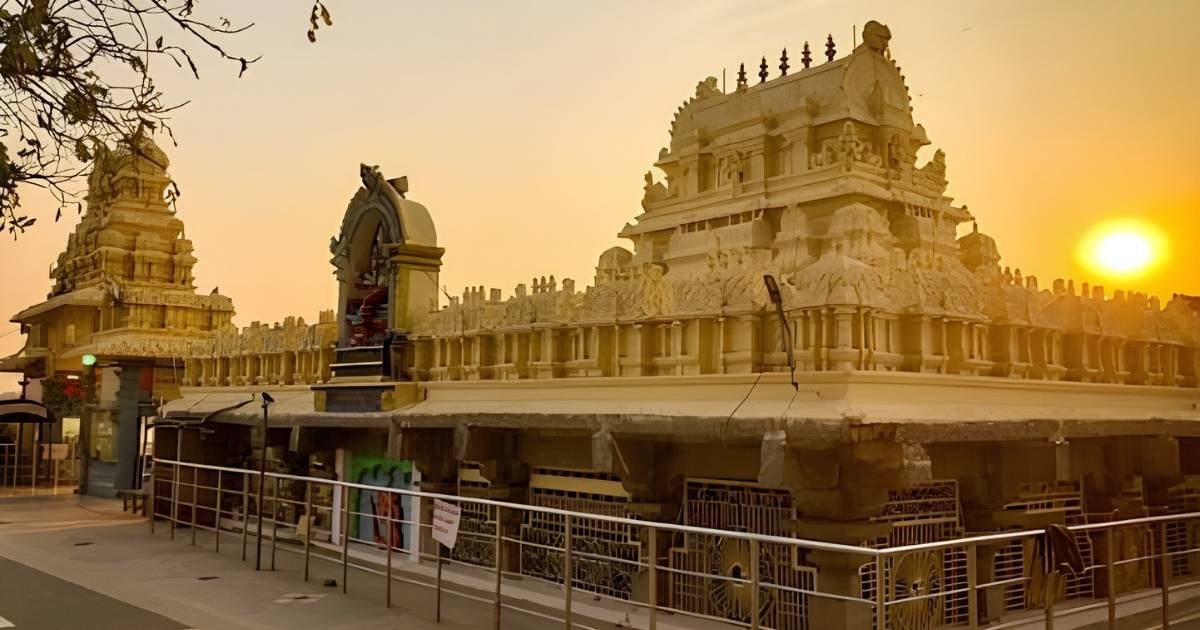
The Bhadrakali Temple sits on a quiet hill between Hanamkonda and Warangal in Telangana. It is one of the best known Devi shrines in the region and a favourite stop for families, pilgrims and history lovers. The goddess here is worshipped as the fierce protector of the Kakatiya kings, and many devotees still visit before exams, new jobs and journeys.
This guide covers temple timings, history, rituals, festivals, routes, tickets and practical tips. Timings and festival dates can change, so confirm them locally before you travel.
Historical Background of Bhadrakali Temple
Telangana Tourism describes the shrine as an ancient temple that dates back to Chalukya rule. Local tradition goes back further than most written records, so history here is a mix of inscriptions, temple memory and oral stories.
Ancient Roots of Bhadrakali Worship
Mother goddess worship is among the oldest living traditions in India. Bhadrakali is a form of Shakti, the divine feminine energy, worshiped for protection and victory. Hilltop shrines near water were common choices for such worship, and this temple fits that pattern perfectly. Natural rock formations and a lake surround it.
Bhadrakali in Warangal’s History
Tradition says the Chalukya king Pulakeshin II built the temple around 625 CE after winning control of the Vengi region. He is said to have built it in gratitude to the goddess for his success.
Later, the Kakatiya rulers of Warangal adopted Bhadrakali as their kula devata, or family deity. Kakatiya kings and queens, including the celebrated Rani Rudrama Devi, are remembered in local pride around this temple.
After the fall of the dynasty, the shrine reportedly suffered neglect. One regional source says it saw major renovation only around 1950. Another notes the present structure may be about 250 years old. Both can be true, since old sites are often rebuilt on the same sacred spot. So when you read “625 CE,” treat it as a strong tradition rather than a dated inscription of the current building.
The Deity: Who Is Goddess Bhadrakali?
Bhadrakali is a fierce yet compassionate form of Goddess Durga. The name combines “Bhadra,” meaning auspicious, with “Kali,” the power of time and transformation. She destroys fear and evil, and she blesses her devotees with courage.
At this temple, the main idol is a stone image of the goddess in a seated posture. She has eight arms, each holding a weapon, and large striking eyes. Devotees say her gaze feels alive at close range.
A famous local belief links the Kohinoor diamond to this shrine. The story says the gem once adorned one of the goddess’s eyes. This is a legend, not a proven historical fact, but it remains a big part of the temple’s fame.
Key facts about the deity:
- Form: Seated, eight armed Bhadrakali
- Role: Kula devata of the Kakatiya dynasty
- Associated deity: Veerabhadra Swamy, as the temple is also known as Sri Bhadrakali Sametha Veerabhadra Swamy Temple
- Vahana: A lion faces the sanctum
Temple Architecture and Layout
The temple stands on a ridge with a calm view of Bhadrakali Lake. The lake is a large man made water body and gives the whole complex a peaceful setting.
Here is what stands out in the layout:
- Carved gateway: The entrance has detailed stone work that suits the Deccan temple tradition.
- Square pillars: Unlike the round, lathe turned pillars common in Kakatiya temples, this shrine is noted for square pillars. Some local accounts link this to its Chalukya origin.
- Antralaya pillar: One inner pillar carries a Sanskrit inscription, known as the Antralaya stambham.
- Garbhagriha: The sanctum holds the main idol.
- Lion vahana: A lion sculpture faces the goddess.
- Lake and rocks: The natural boulders around the site add to the setting.
The structure is Dravidian in style, though simpler than the grand star shaped Thousand Pillar Temple nearby. Its power comes more from the location and atmosphere than from size.
Read More:Thousand Pillar Temple Warangal: Timings, Tickets & Travel Guide
Rituals, Poojas and Sevas
Daily worship follows the Agamic tradition. A typical day includes:
- Morning abhishekam and alankaram: Ritual bathing and decoration of the goddess
- Archana: Chanting of names, usually offered in the devotee’s name and gotra
- Harati and mantrapushpam: Lamp offering and prayers
- Evening pooja: A calmer ritual with lamps and flowers
Special sevas such as kumkum archana, abhishekam and kalyanam are performed on request. Fees and slots can change, so ask at the temple counter on the day. Many devotees also offer coconuts, red flowers, bangles, sarees and kumkum. Some offer lamps made with ghee or oil.
On Tuesdays and Fridays, which are traditionally linked with Devi worship, crowds are usually larger.
Festivals and Cultural Importance
Festivals transform the temple. Here are the main ones.
Sharan Navaratri (Dasara)
The nine day festival begins with Dwajarohanam, the flag hoisting, and Kalasa Sthapana. The goddess is decorated in a different form each day, including Bala Tripura Sundari on the opening day. News reports from past years describe a procession in which temple ornaments are brought from the Thousand Pillar Temple to Bhadrakali with chants of “Bhadrakali Sharanam Mama.” This usually falls in September or October.
Shakambari Utsavalu
Observed in the month of Ashada, this nine night festival honours Goddess Shakambari, who is decorated with vegetables and greens. The 2026 dates were listed as July 15 to July 29 by one temple portal.
Bonalu and Bathukamma
Telangana Tourism lists Bonalu and Bathukamma among the major regional festivals, and the temple community takes part in the celebrations with offerings and processions.
Sammakka Sarakka Jatra
This tribal festival of Medaram is held in the wider Warangal region and draws huge crowds, which also raises visitor numbers across local temples.
Always check exact dates with the temple office, because lunar calendar festivals move every year.
Legends and Devotee Experiences
Several stories keep the temple alive in memory:
- The Kohinoor legend: The diamond is said to have been set in the goddess’s eye.
- The victory vow: Pulakeshin II is said to have built the shrine after a successful campaign.
- The protector of kings: Kakatiya rulers sought her blessing before battles.
Devotees often describe a sense of calm and strength during darshan. Students come for confidence, and families come to thank the goddess after a recovery or a new start. These are personal beliefs and experiences, and they differ from person to person. They are part of why the temple remains so dear locally.
Bhadrakali Temple and Warangal Culture
Warangal is often called the cultural heart of Telangana. The Kakatiya legacy lives in its fort, its stone temples and its tanks. Bhadrakali fits into this story as the guardian goddess of the old kingdom.
Local families still take newborns, newly married couples and new vehicles to the temple for blessings. Women’s festivals such as Bathukamma and Bonalu keep the goddess central to community life. The Telangana state is known for its Shakti traditions, and this temple is a prime example.
How to Reach Bhadrakali Temple, Warangal
The temple lies between Hanamkonda and Warangal and is about 2 to 3 km from Warangal city by road, according to Telangana Tourism.
By road
Warangal is about 150 km from Hyderabad on NH 163 (earlier NH 202). Buses run frequently from Hyderabad to Hanamkonda and Warangal. From either bus stand, an auto or cab reaches the temple in under half an hour in normal traffic.
By train
Warangal Railway Station and Kazipet Junction are the main railheads. Warangal is on the Delhi to Chennai trunk route, so many long distance trains stop there. Take an auto or cab from the station.
By air
The nearest major airport is Rajiv Gandhi International Airport in Hyderabad. From there, reach Warangal by road in roughly three hours.
Local transport tips
- Autos and app cabs are widely available.
- Ask the driver for “Bhadrakali Gudi” for the quickest recognition.
- On festival days, park a little away and walk the final stretch.
Read More :Birla Mandir Hyderabad: White Marble Temple Visitor Guide
Bhadrakali Temple Timings
Most sources list these temple hours:
- Morning: 5:30 AM to 1:00 PM
- Evening: 3:00 PM to 8:00 PM
Some sources show slightly different hours, such as 5:00 AM opening or 8:30 PM and 9:00 PM closing. The temple is generally open all days, with a midday break. During Navaratri and other festivals, the schedule often changes. Ask locally or call before you go.
Best time to visit: Early morning gives you calm darshan and cooler weather. Evenings are lovely for the lake view and the lamp lit atmosphere.
Nearby Places to Visit
Plan a half day or full day around these places:
- Thousand Pillar Temple (about 1.3 km): A 12th century Kakatiya temple of Shiva, Vishnu and Surya, built in 1162 to 1163 CE.
- Padmakshi Temple: A hilltop Devi shrine in Hanamkonda.
- Warangal Fort: Kakatiya ruins and carved gateways.
- Bhadrakali Lake: Calm views near the temple.
- Kakatiya Musical Garden: Close to Warangal Railway Station.
- Ramappa Temple: A UNESCO World Heritage Site, a short drive away.
- Pakhal Lake and Sanctuary: For a nature break.
Allow 1 to 2 hours for the Bhadrakali visit itself.
Spiritual Practices Associated with Bhadrakali
Devotees follow a few common practices:
- Mantra chanting: “Om Bhadrakalyai Namah” is a widely chanted line.
- Tuesday and Friday worship: Traditionally important Devi days.
- Lamp offering: Ghee or oil lamps for protection.
- Red offerings: Red flowers, kumkum and sarees.
- Fasting: Some observe a simple fast on special days.
These are traditional customs, not strict rules. Follow the guidance of the temple priest for any ritual.
Bhadrakali Temple in Modern Devotion
Today the temple blends tradition with convenience. Social media videos, live streams and travel blogs bring many first time visitors. Yet the core experience remains the same: a short walk, a quiet pause before the goddess and a prayer.
The temple also takes part in community activities, and festivals now come with better crowd planning and decorated surroundings. The hill, the lake and the heritage setting continue to attract photographers and families.
Devotee Testimonials
Because I cannot publish personal reviews that are not real, here are the themes devotees commonly mention in public accounts:
- A strong sense of peace during early morning darshan
- Love for the lakeside setting
- Pride in the Kakatiya connection
- Crowd and queue challenges during Navaratri
- Appreciation for the temple’s cleanliness on regular days
If you visit, your own experience will be the best testimonial.
Academic and Artistic Importance
For students of art history, the temple offers a useful study in how Chalukya and Kakatiya styles meet in one region. The square pillars, the Sanskrit inscription on the Antralaya pillar and the Dravidian layout interest researchers.
Artists value the goddess’s fierce expression, the stone carving and the lakeside composition. Photographers enjoy sunrise and evening light. The temple also appears in studies of Shakti worship, regional folklore and Telangana heritage tourism. Telangana Tourism lists Bhadrakali among the key destinations of the Warangal circuit.
Read More: Srirangam Temple Timings 2026: Darshan Timings, Pooja Schedule & Guide
Temple Etiquette and Tips for Visitors
Keep these simple points in mind:
- Dress modestly. Traditional or simple clothes are best.
- Remove footwear before entering the temple premises.
- Visit early on weekdays to avoid long queues.
- Carry small change for offerings and counters.
- Ask before photography. Many sanctums do not allow it.
- Keep valuables safe, especially on festival days.
- Respect the priests and follow queue instructions.
- Avoid plastic, and keep the lake and hill clean.
- Check timings the day before, especially around festivals.
- Carry water in summer, since Warangal can get hot.
1000 Pillar Temple to Bhadrakali Temple Distance
The Thousand Pillar Temple is about 1.3 km from Bhadrakali Temple according to one travel listing. By road it usually takes about 5 to 10 minutes by auto or car, depending on traffic and route. Many visitors combine both in the same trip. A simple plan is to visit the Thousand Pillar Temple first, then continue to Bhadrakali.
Bhadrakali Temple, Warangal Tickets
Entry to the main temple is generally free for darshan. There is no standard entry ticket for regular visitors. Paid options usually apply to special sevas, abhishekam, archana or quick darshan arrangements during busy periods. Ticket prices change, so ask at the temple counter and keep the receipt for any payment. If someone outside the temple offers tickets, check with the temple office first.
Bhadrakali Temple, Warangal Contact Number
I could not verify a current official temple phone number, so I have not listed one. This is safer than sharing a wrong or scam number. To find a reliable contact:
- Check the Telangana Tourism destination page for the temple.
- Ask at the temple office when you arrive.
- Use Google Maps and look for the listing marked as verified.
- Ask your hotel or local driver for the temple office number.
Always confirm a number from two sources before sending money.
FAQs
What are the Bhadrakali Temple timings in Warangal?
Most sources list 5:30 AM to 1:00 PM and 3:00 PM to 8:00 PM, though hours can vary slightly and change during festivals.
Is there an entry fee at Bhadrakali Temple?
Regular darshan is generally free, and fees usually apply only to special sevas or priority darshan.
Who built the Bhadrakali Temple in Warangal?
Tradition credits the Chalukya king Pulakeshin II around 625 CE, and the Kakatiya kings later adopted it as their kula devata.
How far is the Thousand Pillar Temple from Bhadrakali Temple?
About 1.3 km according to one listing, which is roughly a 5 to 10 minute ride.
What is the best time to visit Bhadrakali Temple?
Early morning or evening is best, and Sharan Navaratri and Shakambari Utsavalu offer the liveliest atmosphere with larger crowds.
Final Thoughts
Bhadrakali Temple is more than a stop on a Warangal tour. It combines devotion, Kakatiya memory, a hilltop setting and a lake in one visit. Go early, keep your timing flexible, and pair it with the Thousand Pillar Temple and Warangal Fort for a complete heritage day.
Treat dates, timings and prices as guides, and confirm them locally. With a little planning, your darshan will be smooth and memorable.

2 thoughts on “Warangal Bhadrakali Temple: Timings, History & How to Reach ”