
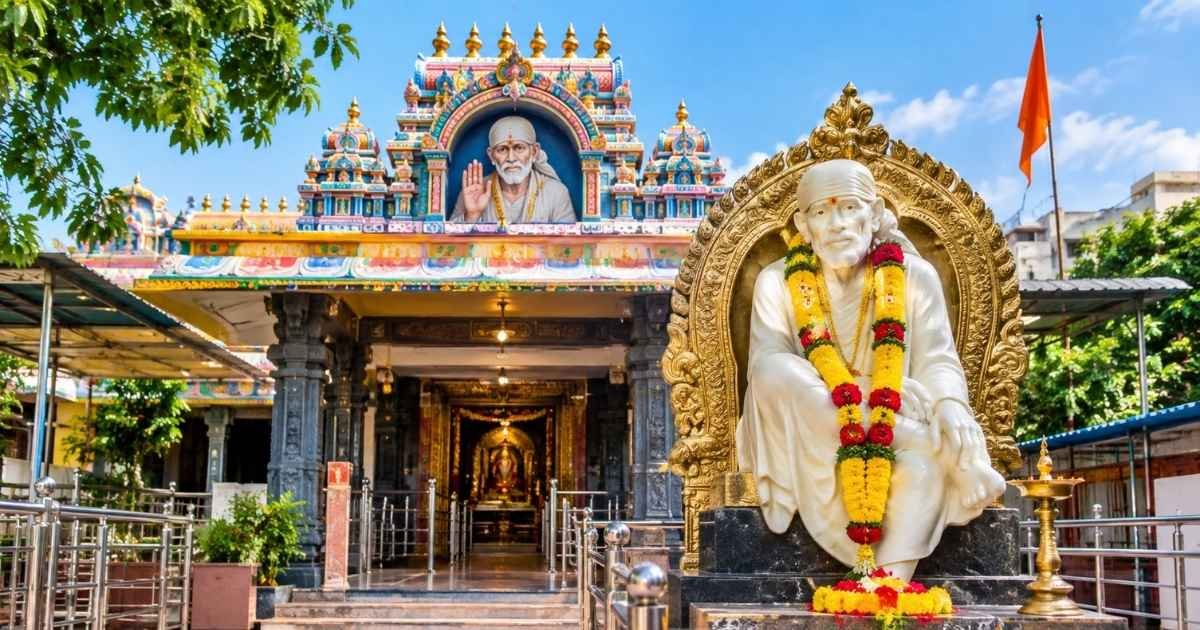
Thursday evenings at Dilsukhnagar look different from the rest of the week. The crowds grow thicker, the aarti bells ring louder, and devotees line up well past the usual hours just to catch a glimpse of Sai Baba’s palanquin. This is the Dilsukhnagar Sai Baba Temple, one of Hyderabad’s most visited shrines, open to devotees of every faith.
This guide brings together the temple’s history, daily aarti timings, festivals, directions, and practical visitor tips in one place. Where sources differ on details like the founding year or exact timings, that is noted clearly so you have an honest picture before you plan your visit.
History of Dilsukhnagar Sai Baba Temple
The Dilsukhnagar Sai Baba Temple was established in 1989 under the Shri Shirdi Sai Baba Sansthan Trust, also referred to in some records as the Sai Sansthan Shirdi Trust. A small number of older listings mention 1980 as a construction date, though the majority of sources point to 1989 as the year the temple was formally established.
Since opening, the temple has grown into one of the most visited religious sites in the city, especially from the 1990s onward. Its popularity grew largely through word of mouth and Thursday devotional gatherings, rather than grand royal patronage, giving it a distinctly community-built character.
The temple has also had a difficult chapter in its history. In November 2002, a bomb explosion at the site injured several devotees. It was reportedly also considered as a target during the 2013 Hyderabad blasts before being withdrawn from those plans, reportedly due to the temple’s security measures. Today, the temple maintains visible security while continuing to welcome large daily crowds without disruption to its devotional atmosphere.
Who Is Shirdi Sai Baba? (Spiritual Background)
Shirdi Sai Baba was a saint and spiritual teacher who lived in Shirdi, Maharashtra, and is revered across religious lines by Hindus, Muslims, and people of other faiths. His teachings centred on two core principles:
- Shraddha (faith): Unwavering trust in the divine and in one’s spiritual path
- Saburi (patience): The discipline to wait calmly for the right outcome, without losing hope
Sai Baba is not associated with any single religious tradition, which is part of why his temples, including this one, attract such a diverse community of devotees. He is widely worshipped as a protector, guide, and remover of suffering.
Spiritual Significance of the Temple
For devotees, the Dilsukhnagar temple is more than a place of worship. It represents a space where anyone, regardless of background, can seek comfort. Visitors commonly pray here for:
- Relief from personal or family hardships
- Guidance during difficult decisions
- Gratitude after a wish is fulfilled
- General peace of mind amid daily stress
Architecture and Temple Structure
The temple’s design reflects a functional, devotee-focused layout rather than an elaborate historical structure. Key features include:
- A main sanctum sanctorum housing the marble idol of Sai Baba
- Walls adorned with paintings and images depicting episodes from Sai Baba’s life
- Open halls designed to accommodate the large Thursday crowds
- Separate areas for yoga and meditation sessions, open to the public at scheduled hours
The overall atmosphere is simple and welcoming, built more for steady daily worship than for grand architectural display.
Read More: ISKCON Vaikuntha Hill Bangalore: Timings & How to Reach
Sai Baba Idol and Symbolism
The main idol in the sanctum is crafted from marble, depicting Sai Baba in his familiar seated posture. The surrounding artwork, showing scenes from his life in Shirdi, helps first-time visitors connect with his story and teachings even before they learn about him in detail.
Sai Baba Temple Dilsukhnagar Timings Today
The most commonly cited general schedule is:
- Monday to Wednesday, Friday to Sunday: 5:00 AM to 9:30 PM
- Thursday and festival days: 5:00 AM to 10:30 PM
A few listings mention a slightly different pattern, such as 5:30 AM to 9:30 PM on regular days, or an older split schedule of 5 AM to 11 AM and then 4 PM to 8 PM. Since listings are not fully consistent, it is wise to check locally or arrive within the widely agreed window of early morning to late evening.
Dilsukhnagar Sai Baba Temple Location
The temple is located at 46, Sai Baba Temple Road, Dilsukhnagar, Hyderabad, close to the Saroornagar Police Station. It sits in one of Hyderabad’s busiest commercial neighbourhoods, making it easy to combine a temple visit with other errands in the area.
Quick location facts:
- Area: Dilsukhnagar
- District: Rangareddy (Dilsukhnagar falls within Hyderabad’s urban limits)
- Landmark: Near Saroornagar Police Station
- Proximity: Very close to Dilsukhnagar Bus Stand and Dilsukhnagar Metro Station
Biggest Sai Baba Temple in Hyderabad
Among the city’s several Sai Baba shrines, the Dilsukhnagar Sai Baba Temple is widely regarded as the most prominent and most visited, particularly for its scale of daily footfall and its Thursday crowds. While it may not be the single largest structure by land area compared to some larger temple complexes in the city, it holds the strongest reputation and highest devotee turnout among Hyderabad’s Sai Baba temples, which is why it is most often referenced when people search for the city’s leading Sai Baba shrine.
Dilsukhnagar Sai Baba Temple Timings (General)
For a quick reference before you leave home:
| Day | Timing |
| Monday to Wednesday | 5:00 AM to 9:30 PM |
| Thursday | 5:00 AM to 10:30 PM |
| Friday to Sunday | 5:00 AM to 9:30 PM |
| Festival days | Extended, often till 10:30 PM |
There is no entry fee to visit the temple. General darshan is free for all devotees.
Daily Aarti Schedule
The temple follows the traditional Shirdi-style aarti pattern, performed in Marathi, with four aartis conducted daily:
- Kakad Aarti (Morning Aarti): Around 5:15 AM, this early ritual awakens the deity and sets a peaceful, devotional tone for the day.
- Madhyan Aarti (Noon Aarti): Performed around 12:00 PM, symbolising protection and blessings as the day moves forward.
- Dhoop Aarti (Evening Aarti): Conducted around 6:00 PM, this is one of the most attended aartis, drawing large evening crowds.
- Shej Aarti (Night Aarti): Performed around 9:00 PM, marking the close of the day’s worship just before the temple shuts its doors.
Each aarti offers a distinct devotional experience, and many regular visitors plan their day specifically around one of these four rituals.
Read More: Bhukailash Temple Tandur: Distance, Timings & Festivals
Thursday Special Significance
Thursday is considered Sai Baba’s most auspicious day, and the temple sees its highest crowds then. The standout event is the Pallaki Seva (Palanquin Seva), held around 7:15 PM every Thursday, where Sai Baba’s idol is carried in a decorated palanquin accompanied by devotional singing. Many devotees specifically plan their weekly visit around this ritual.
Festivals Celebrated at the Temple
Beyond the weekly Thursday gatherings, the temple observes several major festivals through the year:
- Guru Purnima: Honouring Sai Baba as a spiritual guru, marked with special pujas and larger crowds
- Sri Rama Navami: Celebrated with devotional programs alongside the temple’s regular worship calendar
- Sai Baba’s Punyatithi (Samadhi anniversary): Observed with special rituals in his remembrance
- Vijayadashami and other regional festivals: Marked with extended hours and festive decorations
Exact festival dates shift slightly each year based on the lunar calendar, so checking closer to the date is recommended if you are planning a special visit.
Offerings and Sevas
Devotees commonly participate in the following offerings at the temple:
- Archana: Chanting of Sai Baba’s names for individual blessings
- Pallaki Seva: The weekly Thursday palanquin procession
- Nitya Annaprasadam: Free daily meal offering, typically served between 1:30 PM and 2:00 PM
- General donations: Many devotees contribute toward the temple’s community service and Annaprasadam programs
How to Reach Dilsukhnagar Sai Baba Temple
By Metro: The temple is very close to Dilsukhnagar Metro Station on the Red Line of the Hyderabad Metro, making it one of the most metro-accessible major temples in the city.
By Bus: TSRTC buses connect Dilsukhnagar to nearly every part of Hyderabad, with the temple just a short walk from the Dilsukhnagar Bus Stand.
By Road: Autos and cabs are easily available throughout Dilsukhnagar, and the temple’s central location makes it simple to reach from most parts of the city.
By Air: Rajiv Gandhi International Airport, Shamshabad, is the nearest airport, with a cab ride of roughly an hour depending on traffic.
Tip: Search “Sai Baba Temple, Dilsukhnagar” directly on your maps app for the most accurate route, since the area has multiple landmark names in common use.
Read More: Omkareshwar Temple Timings 2026: Darshan Hours, Aarti Schedule & Complete Guide
Best Time to Visit
- Quiet visits: Weekday mornings, outside the Thursday rush, offer the calmest darshan experience.
- Full devotional experience: Thursday evenings, especially around the 7:15 PM Pallaki Seva, offer the temple’s most vibrant atmosphere.
- Festival season: Guru Purnima and Sai Baba’s Punyatithi bring larger crowds but a richer festive experience.
- Meal timing: Arrive by 1:30 PM if you want to be part of the Nitya Annaprasadam offering.
Nearby Places to Visit
Since Dilsukhnagar is centrally located, you can easily combine your visit with other well-known Hyderabad attractions:
- Statue of Equality (Ramanuja): A major spiritual landmark in the city
- Birla Mandir: One of Hyderabad’s most iconic temples
- ISKCON Temple Hyderabad: A popular Krishna temple with a similarly welcoming atmosphere
- Jagannath Temple, Hyderabad: Another well-visited Hindu shrine
- Indira Park: A convenient green space for a relaxed break after temple visits
Why Dilsukhnagar Sai Baba Temple Is Special
A few qualities set this temple apart from many others in Hyderabad:
- Inclusivity. Devotees of all faiths and backgrounds are welcomed, echoing Sai Baba’s own universal teachings.
- Accessibility. Its location near the metro and bus stand makes it one of the easiest major temples to reach in the city.
- Daily devotional rhythm. The four-aarti structure gives visitors a clear, meaningful way to time their darshan.
- Community service. The daily Annaprasadam reflects the temple’s commitment to practical, everyday generosity alongside worship.
- Resilience. Despite past security challenges, the temple has remained a steady, trusted space for the community.
FAQs
What are the timings of Dilsukhnagar Sai Baba Temple?
Generally 5:00 AM to 9:30 PM daily, extending to around 10:30 PM on Thursdays and festival days.
Is there an entry fee to visit the temple?
No, general darshan at the temple is completely free for all devotees.
What is the significance of Thursdays at this temple?
Thursday is Sai Baba’s most auspicious day, marked by the special Pallaki Seva around 7:15 PM.
What is the aarti schedule at Dilsukhnagar Sai Baba Temple?
Four aartis are performed daily: Kakad Aarti around 5:15 AM, Madhyan Aarti at noon, Dhoop Aarti at 6 PM, and Shej Aarti around 9 PM.
Is free food available at the temple?
Yes, Nitya Annaprasadam is served daily, typically between 1:30 PM and 2:00 PM.
Which metro station is nearest to the temple?
Dilsukhnagar Metro Station on the Red Line is right next to the temple.
What festivals are celebrated at this temple?
Guru Purnima, Sri Rama Navami, and Sai Baba’s Punyatithi are among the major festivals observed.
Can I perform seva at this temple?
Yes, devotees can participate in Archana and the weekly Pallaki Seva, among other temple offerings.
Is there parking available near the temple?
Limited parking is available nearby, though the area gets busy, so arriving early is advisable, especially on Thursdays.
How far is the temple from Hyderabad Airport?
Rajiv Gandhi International Airport is roughly an hour’s drive away, depending on traffic conditions.
Conclusion
The Dilsukhnagar Sai Baba Temple has earned its place as one of Hyderabad’s most beloved spiritual landmarks, not through ancient history, but through decades of steady, inclusive devotion. Its four daily aartis, bustling Thursday evenings, and simple commitment to serving every devotee who walks through its doors continue to draw crowds from across the city and beyond.
Before you visit, confirm the day’s timings, especially if you’re planning around Thursday’s Pallaki Seva, and consider timing your trip around the Nitya Annaprasadam if you want the complete temple experience. With its central location and easy metro access, this temple makes for a meaningful stop on any Hyderabad spiritual trail.